Coastal and marine environments present some of the most challenging conditions for construction materials. High humidity, saltwater exposure, strong UV radiation, and temperature fluctuations accelerate material degradation, especially for traditional metals. In these environments, structural systems must not only perform under load but also resist corrosion and maintain integrity over long service periods.
As a result, FRP pultrusion for coastal projects has become an increasingly preferred solution. Pultruded composite materials offer a combination of corrosion resistance, lightweight performance, and long-term durability that addresses the limitations of steel in marine environments.
Challenges of Coastal and Marine Environments
Coastal environments are highly aggressive due to constant exposure to salt, moisture, and UV radiation.
Saltwater is particularly damaging to steel structures. Chloride ions penetrate protective coatings, initiating corrosion that spreads over time. Even galvanized or coated steel requires regular maintenance, especially in tropical coastal regions where humidity and temperature accelerate degradation.
Typical challenges include:
- Rapid corrosion and structural weakening
- High maintenance and repainting frequency
- Reduced service life of structural components
- Increased operational and lifecycle costs
These factors make material selection critical for coastal infrastructure and industrial facilities.
What Is FRP Pultrusion and Why It Matters
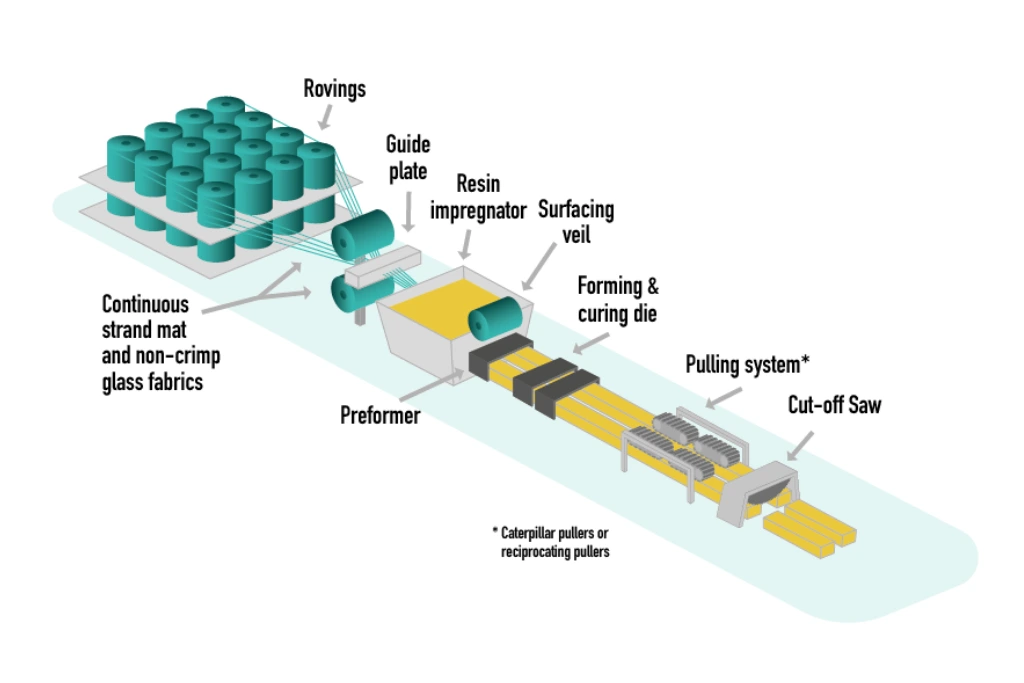
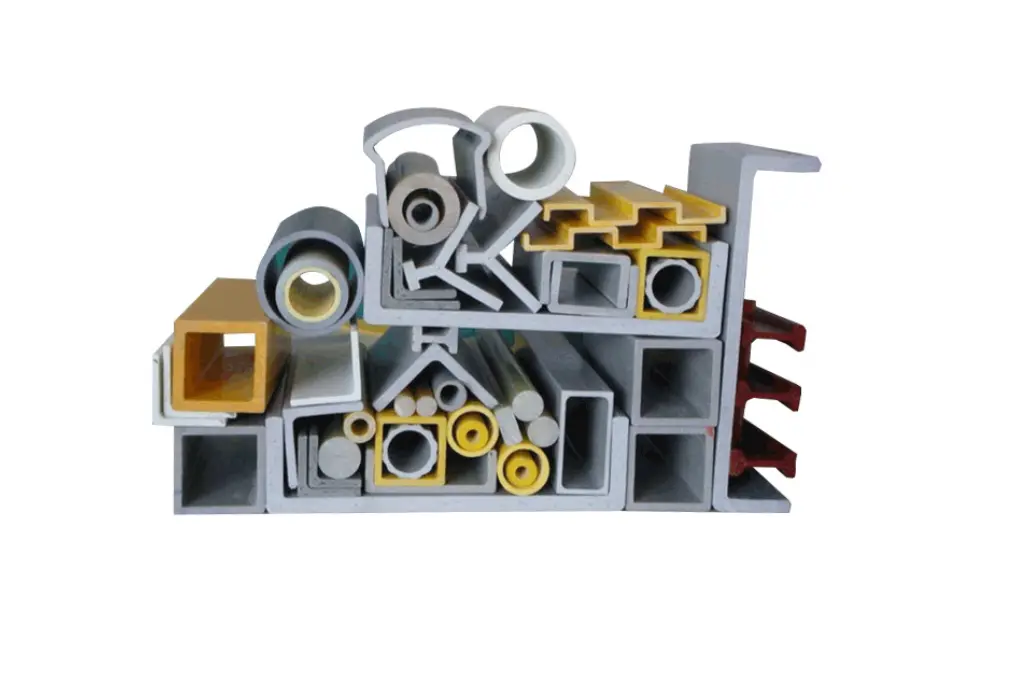
FRP pultrusion is a continuous manufacturing process used to produce high-performance composite structural profiles.
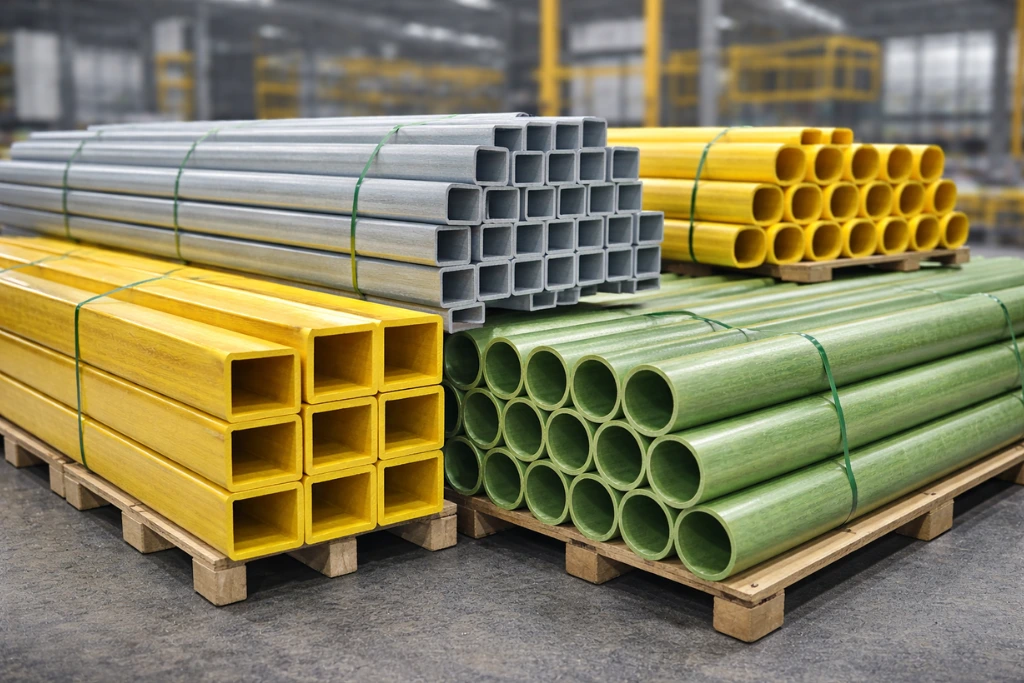
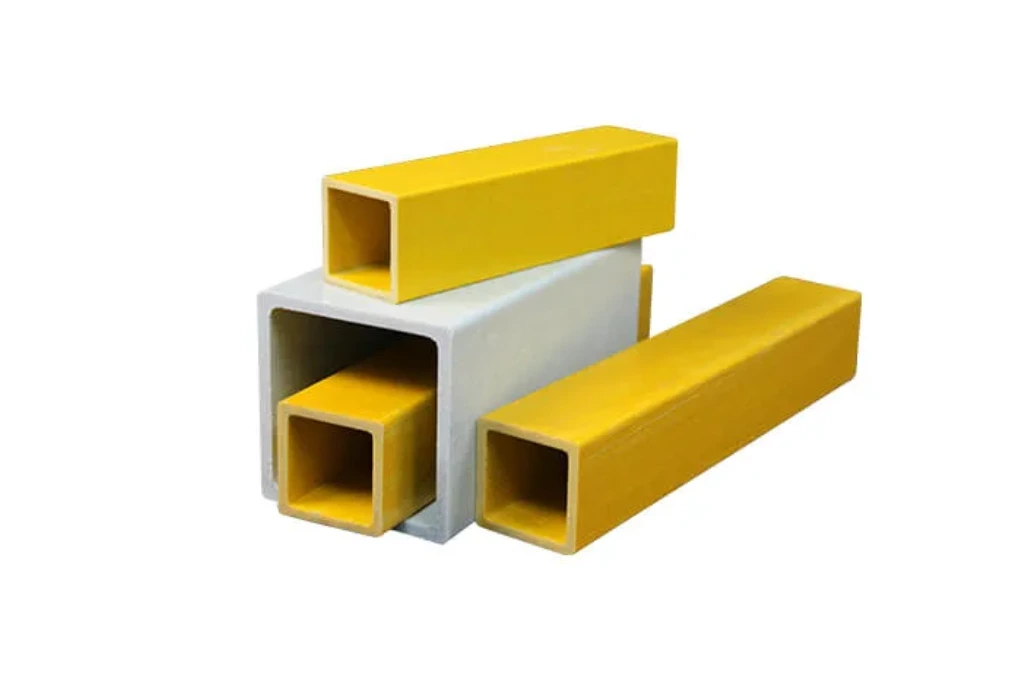
During this process, continuous fiberglass reinforcement is combined with resin and pulled through a heated die to form profiles with consistent geometry and mechanical properties. The result is a range of pultruded FRP structural profiles designed for load-bearing and structural applications.
Unlike steel, FRP materials are inherently resistant to corrosion because their performance is based on material composition rather than surface coatings. This makes them particularly suitable for FRP profiles for saltwater environments and tropical coastal regions.
Corrosion Resistance: A Key Advantage Over Steel
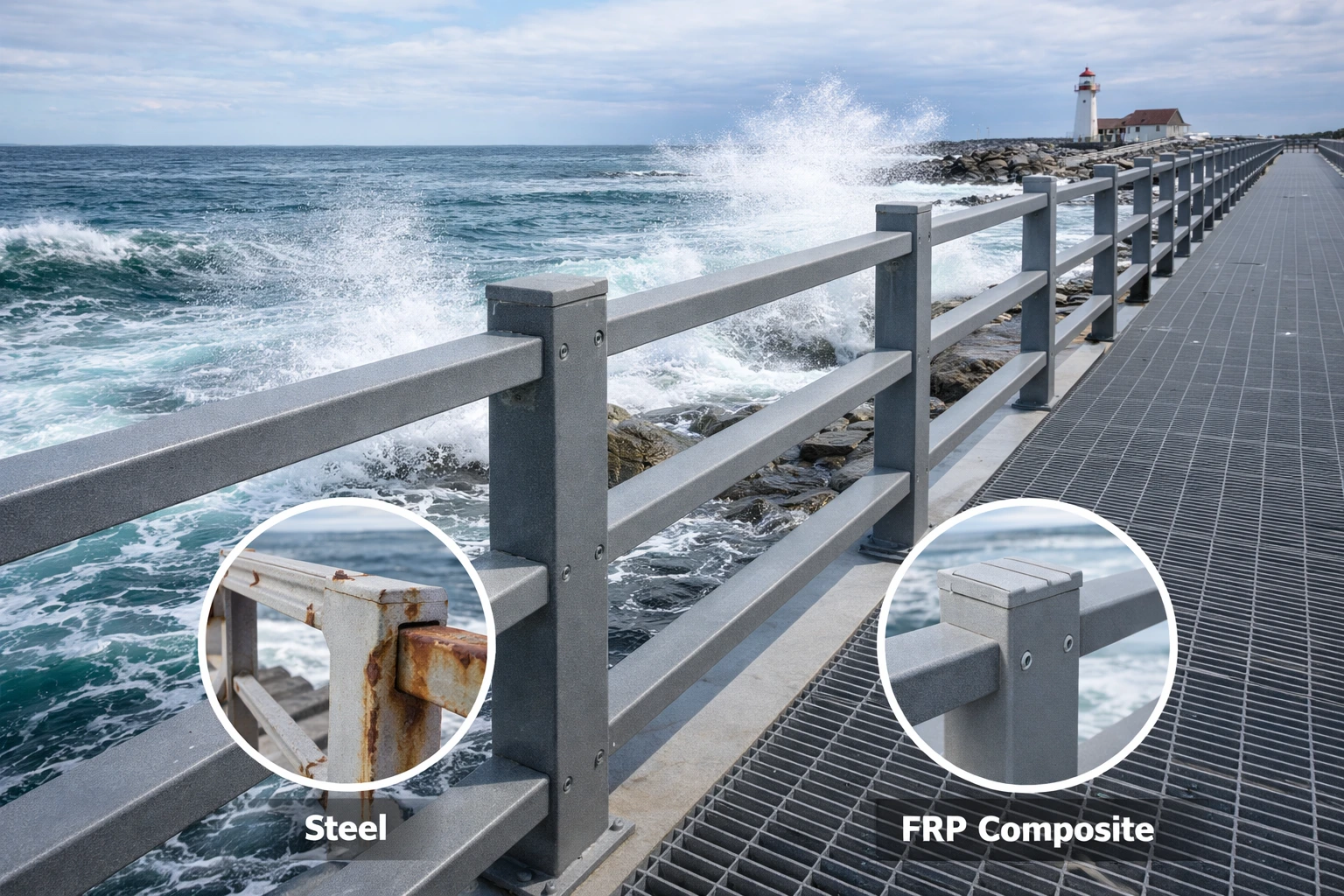
Corrosion resistance is the most significant advantage of FRP in marine environments.
Steel structures rely on protective coatings to prevent rust, but these coatings degrade over time due to mechanical wear and environmental exposure. Once damaged, corrosion begins and spreads, compromising structural performance.
In contrast, corrosion-resistant FRP profiles do not rust or oxidize. Their resistance is embedded throughout the entire cross-section, ensuring consistent performance even when exposed to saltwater, humidity, or chemicals.
This makes FRP pultrusion solutions ideal for:
- Coastal industrial facilities
- Marine infrastructure
- Chemical plants near shorelines
- Offshore-related installations
Performance in Tropical Coastal Regions
Tropical coastal regions introduce additional challenges such as high UV exposure and extreme humidity.
Steel structures expand and contract with temperature changes, which can lead to coating failure and accelerated corrosion. In contrast, UV-resistant FRP profiles are designed to maintain surface integrity and structural stability under prolonged sunlight exposure.
Additionally, FRP materials are not affected by moisture in the same way as metals. This makes FRP profiles for tropical coastal regions particularly suitable for long-term outdoor applications without degradation.
Lightweight Advantage in Coastal Construction
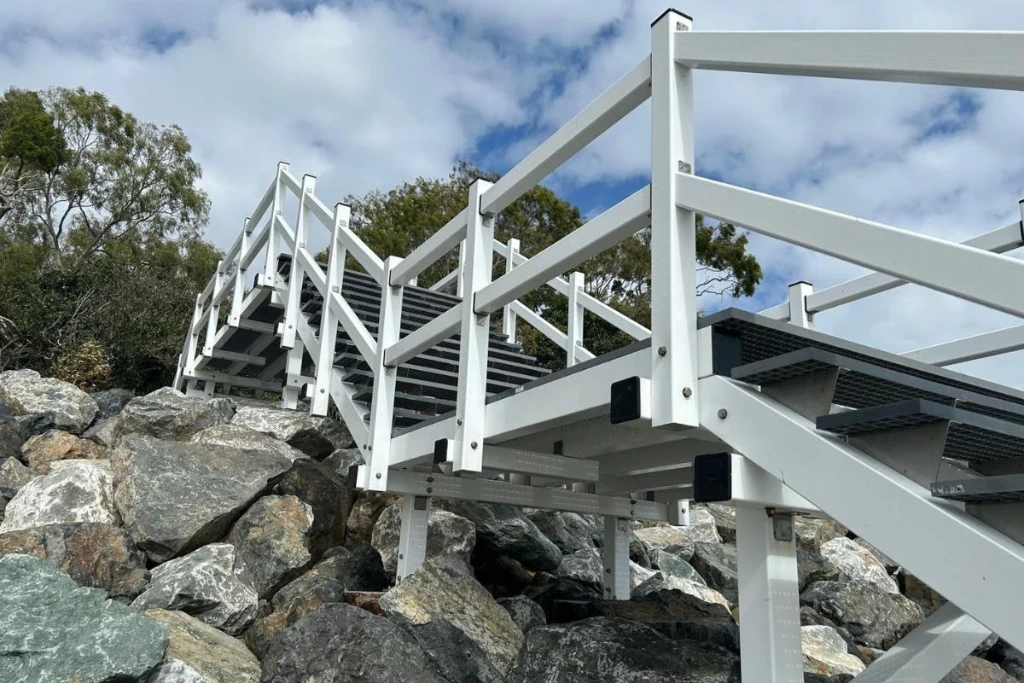
Lightweight FRP profiles provide significant advantages in coastal and remote project locations.
Transporting heavy steel components to coastal or island sites can be costly and logistically complex. Lightweight FRP profiles reduce transportation challenges and simplify installation.
Key benefits include:
- Easier handling and faster installation
- Reduced load on supporting structures and foundations
- Lower transportation costs for remote locations
- Increased efficiency in modular construction
These advantages are especially valuable in coastal infrastructure projects where access and logistics are limited.
Low Maintenance and Lifecycle Cost Efficiency
Low maintenance FRP profiles significantly reduce long-term operational costs.
Steel structures in coastal environments require regular inspection, repainting, and corrosion treatment. Over time, these maintenance activities increase total lifecycle cost and may disrupt operations.
FRP structures, on the other hand, require minimal maintenance due to their inherent resistance to environmental degradation. This makes low maintenance FRP profiles a cost-effective solution for long-term coastal projects.
Electrical Safety and Non-Conductive Applications
FRP materials provide additional safety benefits in coastal electrical infrastructure.
In marine and coastal facilities, electrical systems are often exposed to moisture and salt, increasing the risk of electrical hazards. Non-conductive FRP fencing and structural profiles offer inherent insulation, reducing the risk of electrical conduction.
Applications include:
- Coastal substations and power distribution systems
- Offshore energy infrastructure
- Industrial facilities with sensitive electrical equipment
This makes FRP a safer alternative to conductive materials like steel or aluminum.
Applications of FRP Pultrusion in Coastal Projects
FRP pultrusion solutions are widely used across coastal and marine infrastructure.
Typical applications include:
- Structural frames and support systems
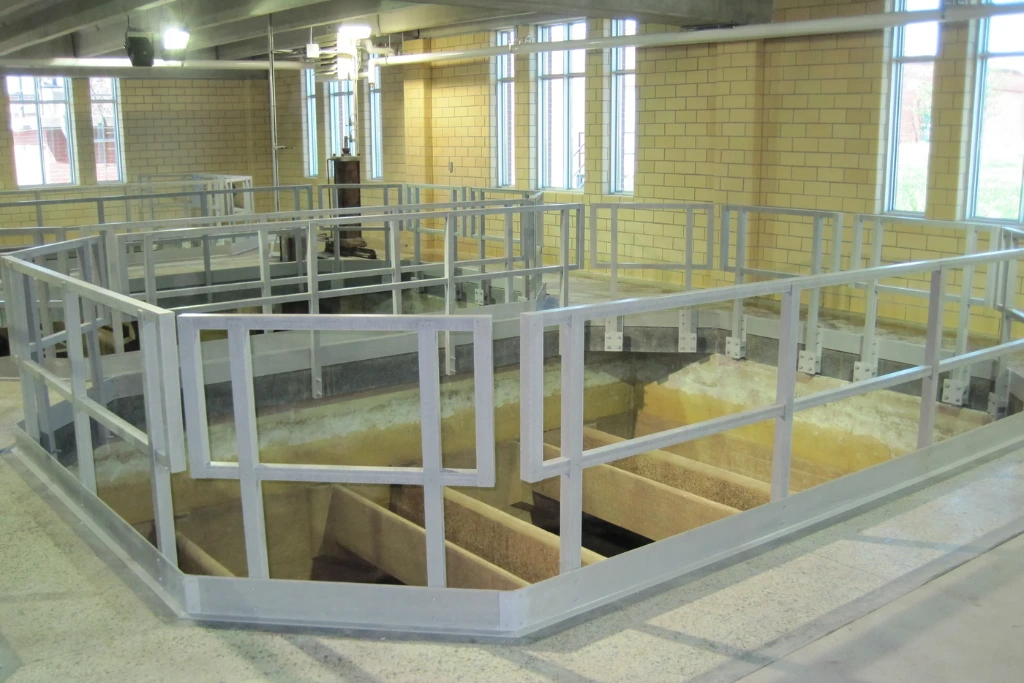
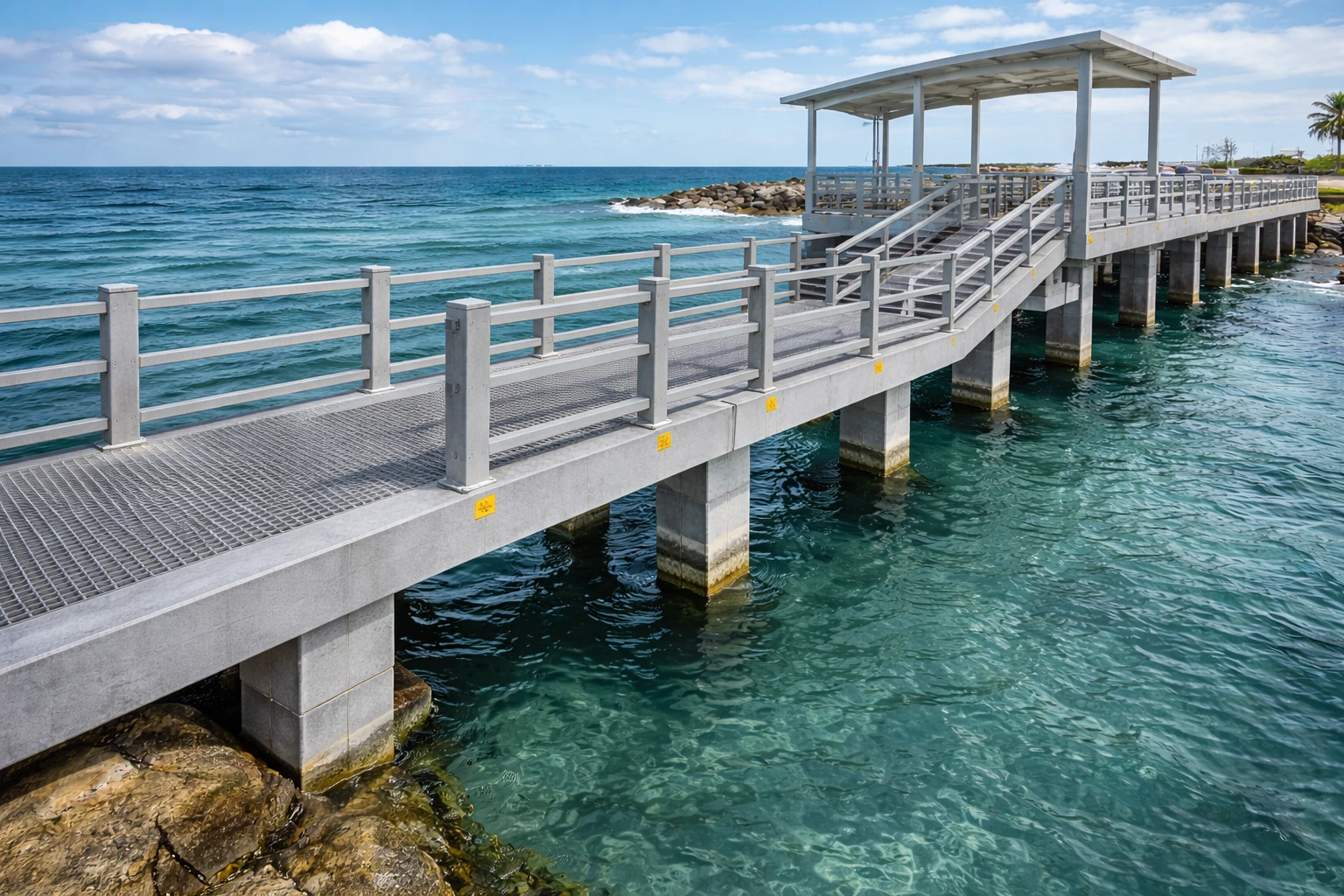
- Walkways, platforms, and access structures
- Fencing systems and safety barriers
- Industrial roof structures in coastal facilities
FRP fencing systems, including electric security FRP fence and industrial barriers, benefit from corrosion resistance and long-term stability, ensuring reliable performance in harsh conditions.
THE FRONT and STRONX Pultruded Solutions for Coastal Projects
THE FRONT supplies pultruded composite solutions for coastal and industrial applications through its STRONX product line.
STRONX, the pultruded FRP product line of THE FRONT, includes structural profiles designed for demanding environments such as coastal and marine projects. These profiles are developed to provide durability, lightweight performance, and resistance to corrosion and UV exposure.
By focusing on controlled manufacturing processes and export-oriented supply, THE FRONT supports global demand for FRP pultrusion for coastal projects, particularly in regions where environmental conditions challenge traditional materials.
Why FRP Outperforms Steel in Marine Environments
The comparison between FRP and steel in coastal projects highlights clear long-term advantages.
FRP profiles offer:
- Inherent corrosion resistance without coatings
- Reduced maintenance requirements
- Lightweight performance for easier installation
- Electrical insulation for enhanced safety
- Stable performance in UV and humid conditions
Steel, while strong, requires continuous protection and maintenance to maintain performance in marine environments.
As a result, FRP pultrusion is increasingly recognized as a more sustainable and reliable solution for coastal infrastructure.
FRP pultrusion for coastal projects provides a durable, efficient, and low-maintenance alternative to traditional materials.
By combining corrosion resistance, lightweight design, UV stability, and electrical safety, pultruded FRP profiles address the unique challenges of marine and tropical environments.
Through its STRONX product line, THE FRONT supports industrial and infrastructure projects with composite solutions designed for long-term performance in coastal conditions. As demand for resilient and sustainable materials grows, FRP pultrusion continues to demonstrate clear advantages over steel in marine environments.