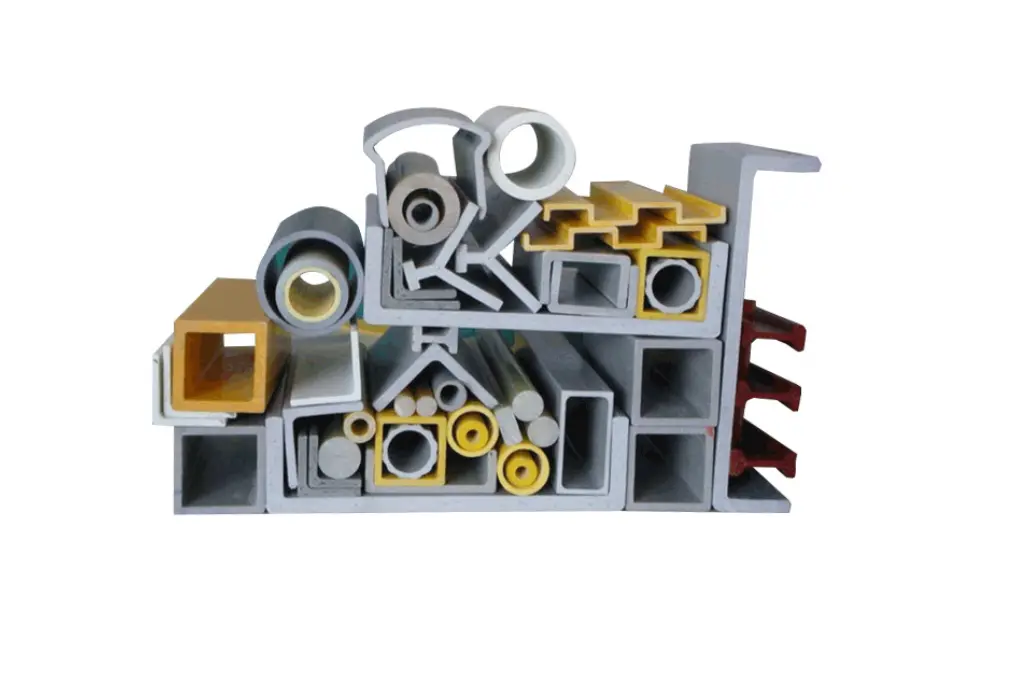
FRP (Fiberglass Reinforced Polymer) has become one of the most important composite materials used in industrial and infrastructure applications. As industries shift toward lightweight, corrosion-resistant, and low-maintenance materials, advancements in FRP technology have been essential in improving consistency, performance, and production efficiency. Modern FRP manufacturing processes give producers the ability to deliver stable material quality at scale, enabling FRP products to meet the demands of harsh operating environments.
Manufacturers like THE FRONT apply a range of FRP production methods—including Hand Lay-up, Light RTM, Spray-up, and controlled continuous panel manufacturing—to create dependable composite roofing sheets, translucent panels, and industrial components.
The Evolution of FRP Technology in Industrial Manufacturing
FRP technology defines the methods, materials, and production controls used to create fiberglass-reinforced composites with long-term durability.
Advances in FRP manufacturing have transformed how materials perform under extreme weather, corrosive chemicals, or continuous loading.
Modern FRP technology focuses on:
- More stable resin systems
- Better fiber distribution
- Improved surface protection through gelcoats
- Enhanced dimensional accuracy in large-volume production
- Consistent manufacturing cycles to ensure repeatable quality
As a result, today’s FRP panels and components demonstrate higher strength, better UV resistance, and superior outdoor durability compared with earlier-generation composites.
FRP Production Process: Foundation of Material Quality
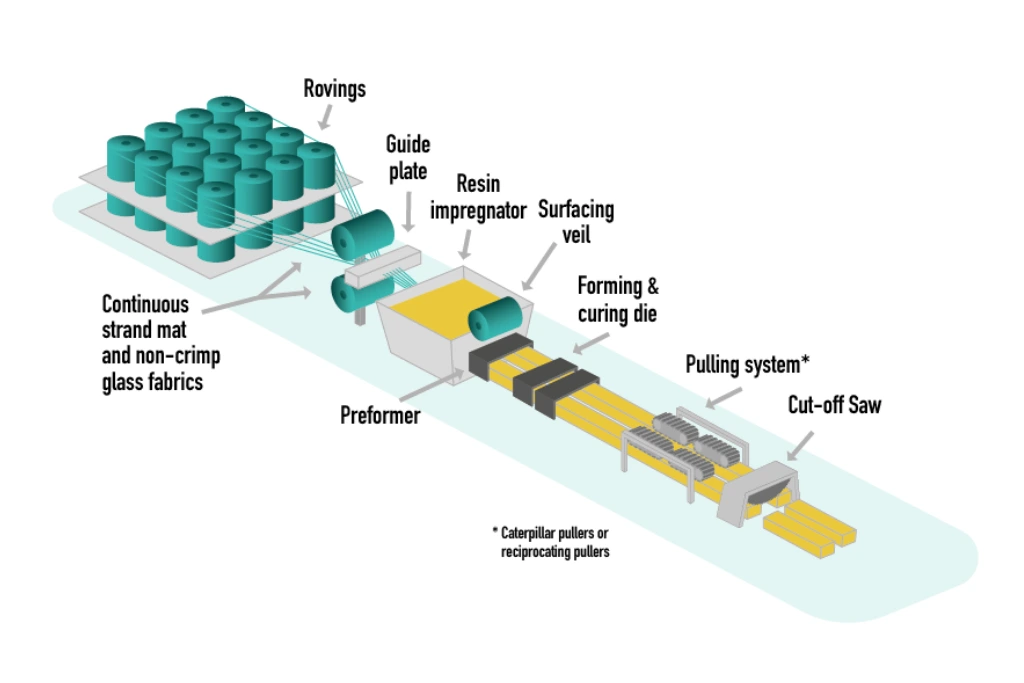
The FRP production process determines how fibers and resin interact to create a strong, consolidated composite.
Each manufacturing method results in different surface characteristics, mechanical performance, and production efficiency.
During fabrication, glass fibers provide reinforcement, while resin acts as a protective matrix that bonds the structure together and resists corrosion. The combination of fiber architecture and resin quality determines the final strength and stability of the composite panel or profile.
Key factors that influence FRP performance include:
- Fiber alignment and layer structure
- Resin impregnation and curing quality
- Gelcoat selection for UV and weathering resistance
- Control of temperature, pressure, and production timing
Well-controlled production not only improves product longevity but also reduces the need for maintenance.