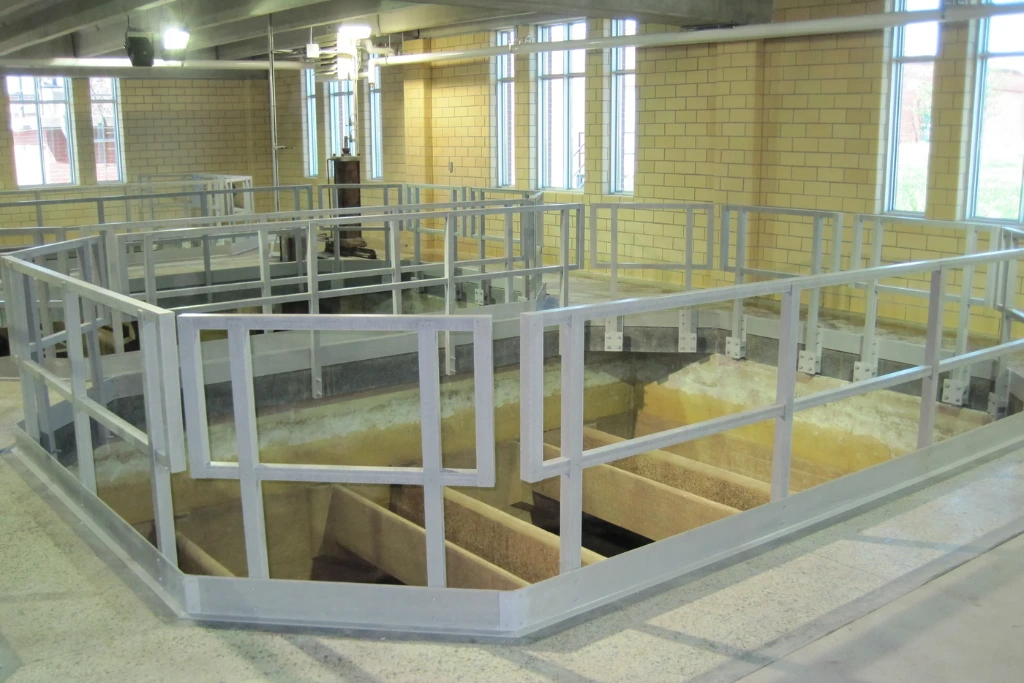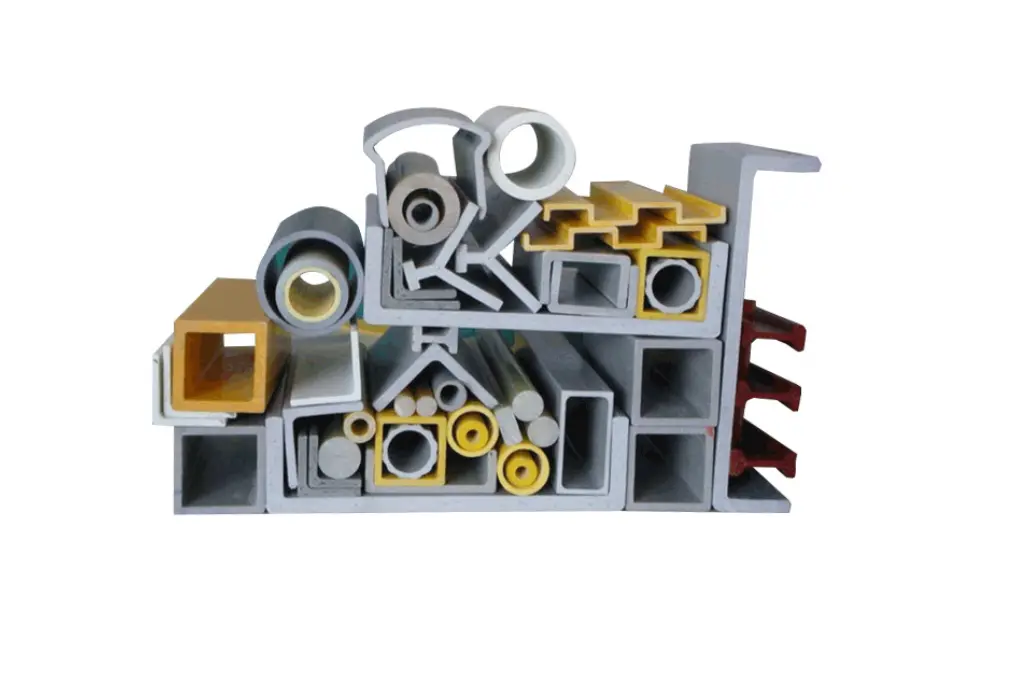
Industrial stair systems are more than simple access structures they are critical safety components that support daily operations in factories, power plants, chemical facilities, wastewater treatment plants, and offshore installations. In these environments, stairs are frequently exposed to water, chemicals, oils, and continuous foot traffic, making slip resistance and long-term durability essential design considerations.
Traditional steel stair treads may provide adequate structural strength, but they often require ongoing maintenance to prevent corrosion and maintain safe walking surfaces. As industries seek safer and lower-maintenance alternatives, FRP stair treads have become an increasingly popular solution. Manufactured from fiberglass-reinforced plastic composites, these products combine high mechanical strength, corrosion resistance, and non-slip performance, making them ideal for demanding industrial applications.
Why Stair Tread Selection Matters in Industrial Facilities
Every industrial facility includes elevated platforms, mezzanines, equipment access points, and maintenance walkways connected by stair systems. These areas are frequently exposed to:
- Rain and standing water
- Oil and grease
- Chemical splashes
- High humidity
- Heavy pedestrian traffic
A safe stair system depends not only on its supporting structure but also on the performance of its tread surface. Selecting the appropriate stair tread material directly affects worker safety, maintenance costs, and the overall service life of the facility.
What Are FRP Stair Treads?
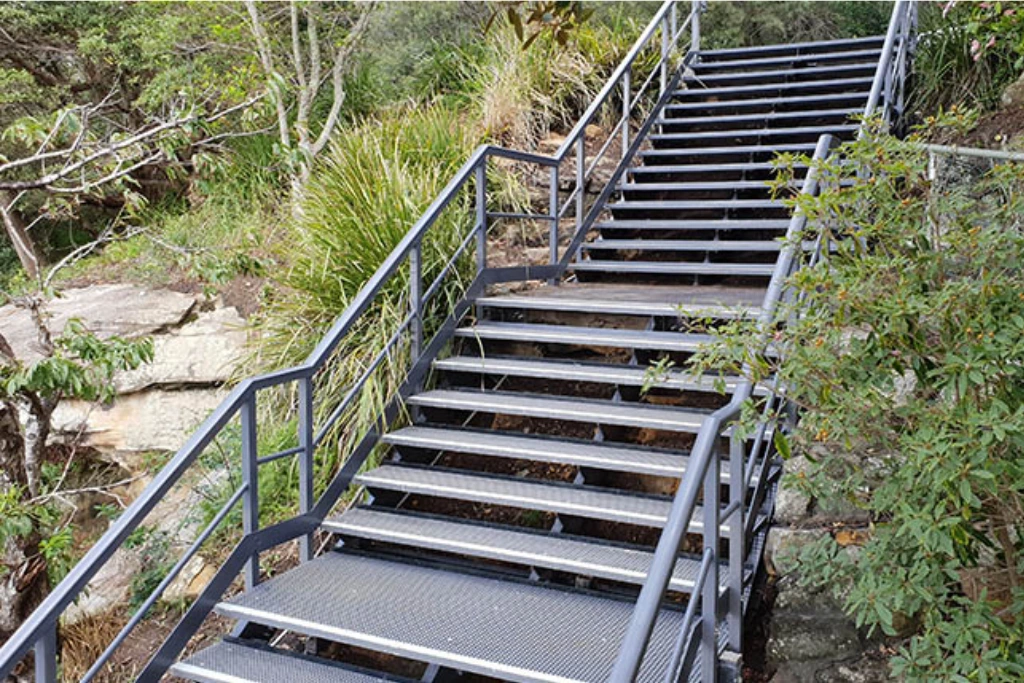
FRP stair treads are prefabricated stair panels manufactured from fiberglass-reinforced plastic, typically using molded FRP grating as the core structural material.
Unlike solid metal treads, FRP stair treads grating features an open-grid design that allows water, dirt, and debris to pass through the surface. This helps keep walking areas cleaner and significantly reduces the risk of slipping.
Typical FRP stair systems include:
- Individual stair treads
- Stair landings
- Platform flooring
- Maintenance access stairs
- Emergency escape stairways
The open-grid construction also contributes to lower overall weight while maintaining excellent structural performance.
Superior Slip Resistance for Workplace Safety
One of the primary reasons engineers specify FRP staircase grating is its excellent slip resistance.
Industrial stairs are frequently exposed to wet or contaminated conditions where smooth metal surfaces can become hazardous. Non-slip FRP grating is manufactured with an integrally molded textured surface that provides reliable traction even when exposed to water, oil, or chemicals.
This improves safety in facilities such as:
- Chemical processing plants
- Food manufacturing factories
- Marine terminals
- Water treatment plants
- Mining operations
Reducing slip hazards helps create safer working environments while supporting occupational safety objectives.
Corrosion Resistance Reduces Maintenance Requirements
Corrosion remains one of the most significant maintenance challenges for industrial stair systems.
Steel stair treads often require protective coatings, repainting, or replacement after years of exposure to moisture and aggressive chemicals. Once coatings deteriorate, corrosion can rapidly compromise both appearance and structural integrity.
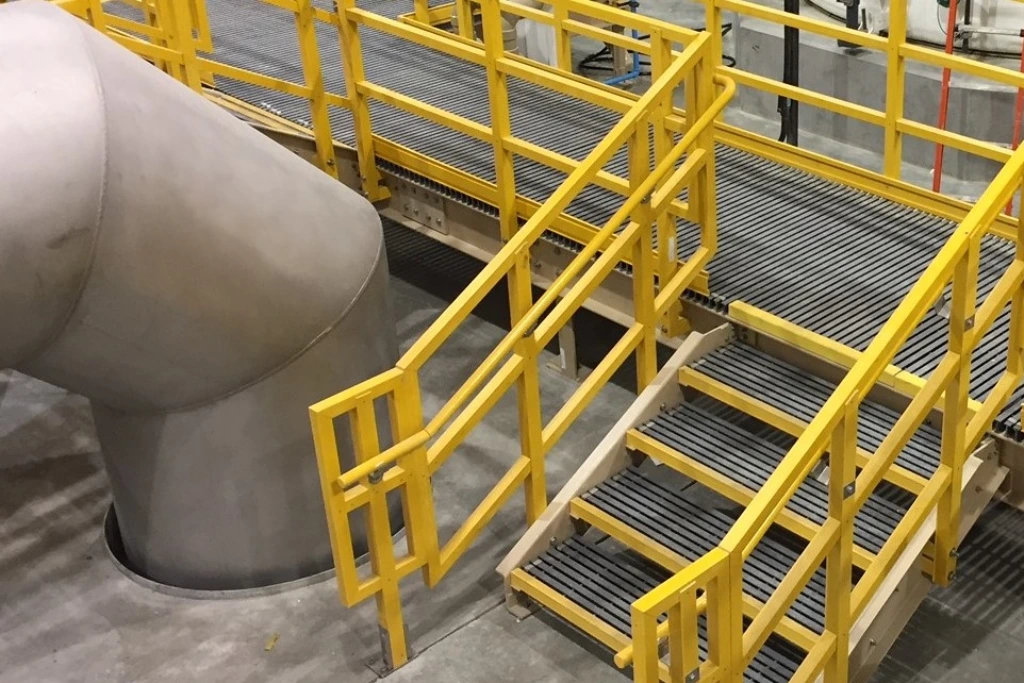
By contrast, corrosion-resistant FRP grating does not rust because corrosion resistance is an inherent property of the composite material.
This makes FRP stair systems particularly suitable for:
- Coastal facilities
- Fertilizer plants
- Petrochemical complexes
- Wastewater treatment plants
- Industrial processing environments
The result is longer service life with significantly reduced maintenance.
Lightweight Construction Simplifies Installation
Another important advantage of lightweight FRP grating is ease of installation.
Compared with steel stair assemblies, FRP stair treads are considerably lighter, providing several practical benefits:
- Faster installation
- Easier transportation
- Reduced lifting equipment requirements
- Lower installation labor
- Simplified maintenance and replacement
For projects involving elevated structures or remote locations, lightweight materials also improve construction efficiency.
High Structural Performance with Molded FRP Grating
Although lightweight, high-quality FRP grating delivers excellent structural performance.
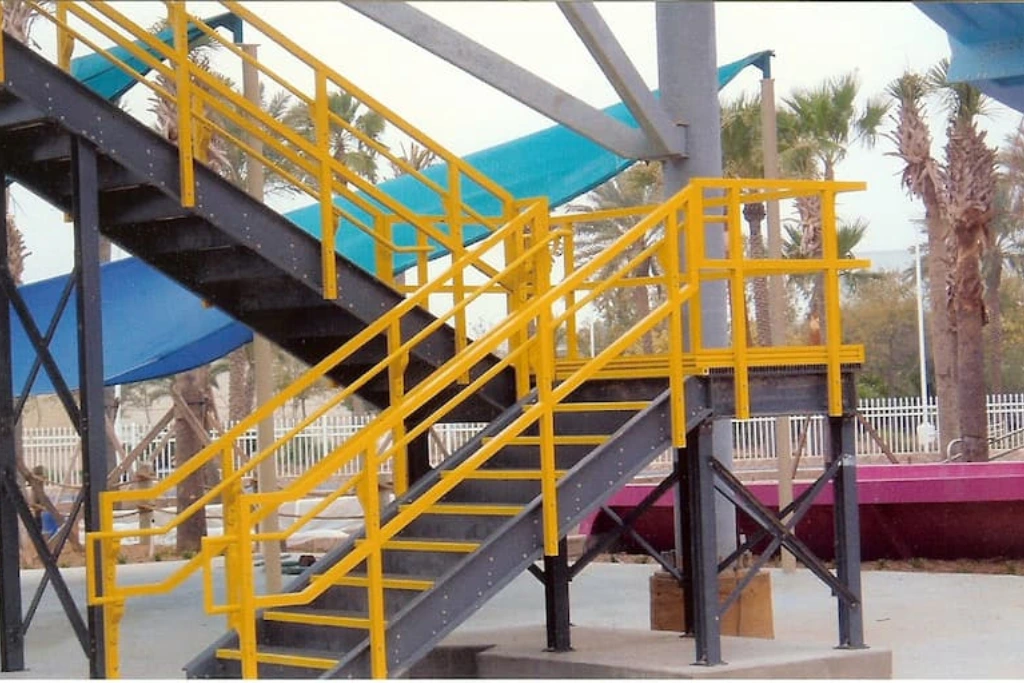
Molded FRP grating distributes loads through an interconnected grid, creating a rigid walking surface capable of supporting industrial pedestrian traffic while maintaining dimensional stability.
Depending on project requirements, FRP stair treads can be designed with:
- Anti-slip nosings
- High-visibility edge inserts
- Various panel thicknesses
- Different mesh configurations
These options allow engineers to select products appropriate for specific operational conditions.
Typical Applications of FRP Stair Treads
The versatility of FRP stair systems makes them suitable across numerous industries.
Chemical Processing Plants
Resistance to corrosive chemicals helps maintain long-term structural reliability.
Wastewater Treatment Facilities
Continuous exposure to moisture makes corrosion-resistant materials essential.
Power Generation Plants
Electrical insulation and low maintenance support safe operation.
Offshore and Marine Facilities
Saltwater environments accelerate steel corrosion, making composite stair systems an attractive alternative.
Manufacturing Plants
Safe maintenance access and durable stairways improve operational efficiency throughout the facility.
Integrating Stair Treads into Complete Access Systems
Modern industrial facilities require integrated access solutions rather than individual components.
FRP stair treads are commonly installed alongside:
- Walkways
- Platforms
- Catwalks
- Access ramps
- Safety handrail systems
Using compatible composite materials throughout the access system helps maintain consistent performance, appearance, and maintenance requirements across the facility.
Choosing a Reliable FRP Grating Supplier
The performance of industrial stair systems depends heavily on manufacturing quality.
When selecting an FRP grating supplier, project owners should evaluate:
- Manufacturing consistency
- Mechanical performance
- Resin system quality
- Product dimensional accuracy
- Engineering support
- Production capacity
- Export experience
Reliable manufacturers ensure that stair treads perform consistently throughout long-term industrial service.
THE FRONT and ULTRALITE FRP Stair Solutions
THE FRONT manufactures industrial FRP grating solutions under its ULTRALITE product line.
ULTRALITE includes molded FRP grating suitable for walkways, platforms, trench covers, and FRP stair treads used in industrial access systems. Designed for corrosion resistance, lightweight construction, and reliable non-slip performance, ULTRALITE products support demanding applications across industrial, infrastructure, and utility projects.
With export-oriented manufacturing capabilities, THE FRONT supplies composite grating solutions to customers seeking durable and low-maintenance alternatives to conventional steel access systems.
Why More Industrial Projects Are Choosing FRP Stair Treads
As industrial facilities continue to prioritize safety, operational efficiency, and lifecycle cost reduction, composite stair systems are becoming increasingly common.
Compared with traditional steel solutions, fiberglass stair treads provide several long-term advantages:
- Excellent slip resistance
- Outstanding corrosion resistance
- Lightweight construction
- Reduced maintenance requirements
- Long service life
- Reliable structural performance
These characteristics make FRP stair systems a practical investment for facilities operating in demanding industrial environments.
Safe access systems are fundamental to industrial operations, and stair treads play a vital role in protecting personnel while supporting efficient maintenance activities.
By combining the benefits of molded FRP grating, corrosion resistance, lightweight construction, and non-slip performance, FRP stair treads provide a durable solution for modern industrial facilities.
Through its ULTRALITE product line, THE FRONT delivers high-quality composite grating products designed to meet the performance requirements of industrial stairways, platforms, and access systems worldwide.