As the global transition toward renewable energy accelerates, the demand for durable, lightweight, and low-maintenance construction materials continues to grow. Solar farms, wind power facilities, and other clean energy projects are often installed in harsh outdoor environments where structural components must withstand continuous UV exposure, moisture, temperature fluctuations, and corrosive conditions over many years.
Traditional materials such as steel have long been used for supporting structures, but they often require regular maintenance to prevent corrosion and extend service life. Today, FRP pultruded profiles for renewable energy are becoming an increasingly attractive alternative, offering long-term structural performance while reducing maintenance costs and installation complexity.
Why Material Selection Matters in Renewable Energy Projects
Renewable energy infrastructure is expected to operate reliably for decades under demanding environmental conditions.
Whether supporting photovoltaic panels in desert climates or structural components in offshore wind facilities, construction materials must maintain mechanical performance with minimal degradation. Key challenges include:
- Continuous UV exposure
- Rain, humidity, and coastal salt spray
- Electrical safety requirements
- Long service life with limited maintenance
- Efficient transportation and installation
Selecting the right structural material directly influences project reliability, operating costs, and lifecycle value.
What Are FRP Pultruded Profiles?
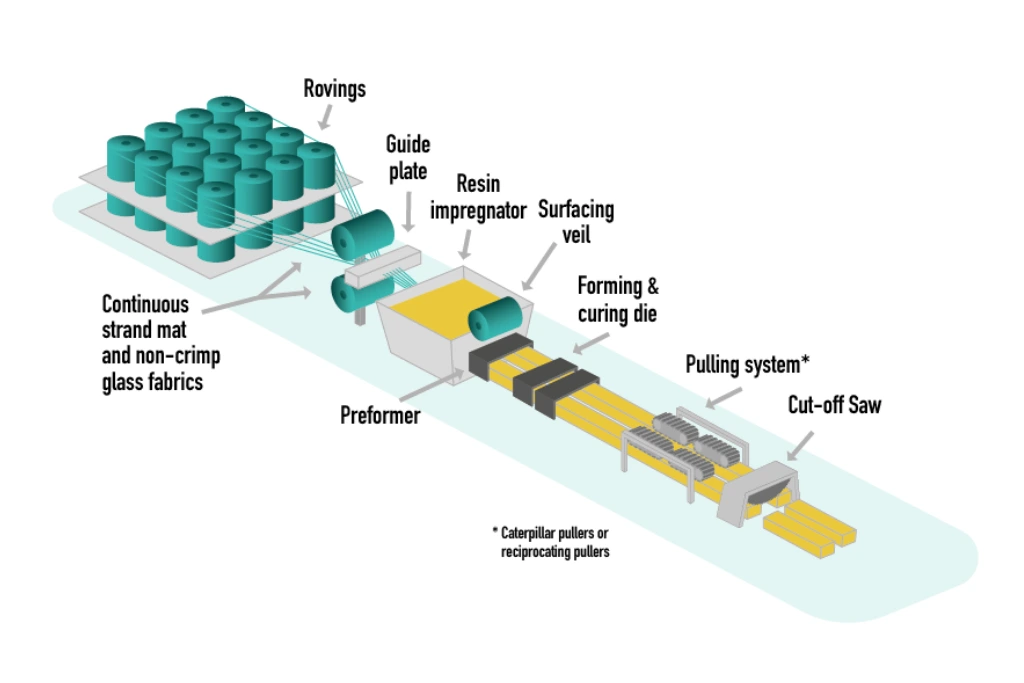
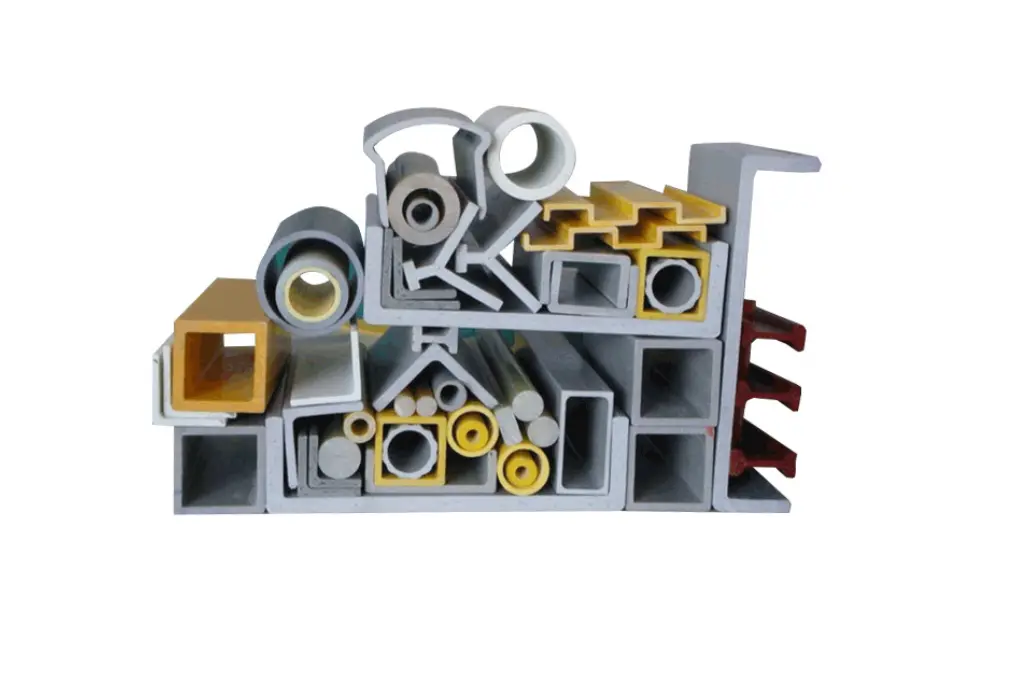
Pultruded FRP profiles are structural composite components manufactured through a continuous pultrusion process.
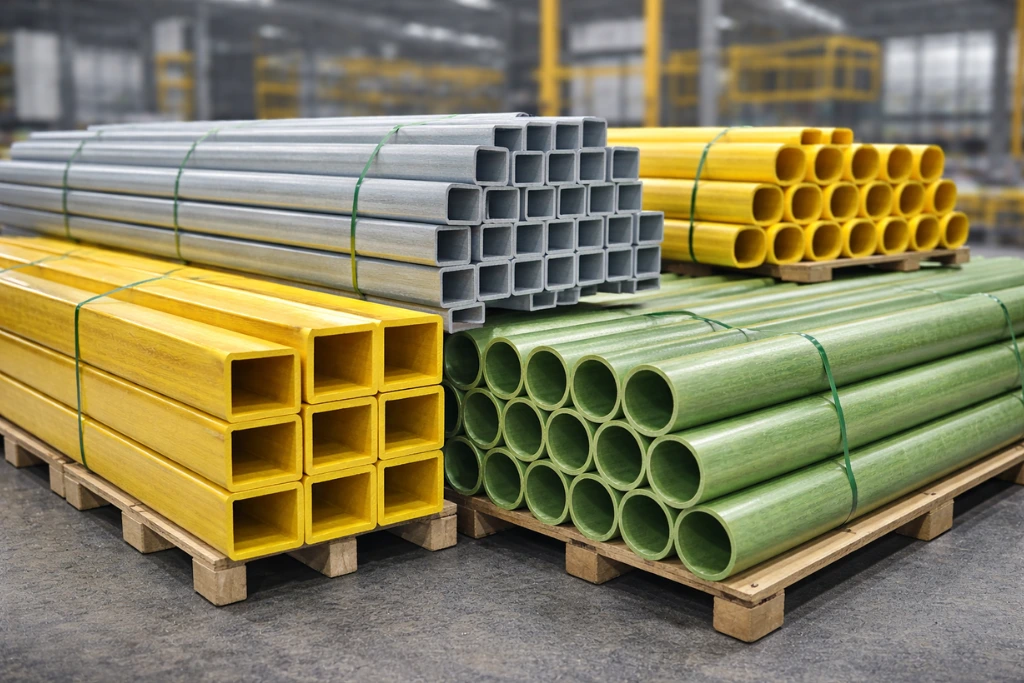
Continuous glass fibers are impregnated with resin and pulled through a heated die to produce profiles with consistent dimensions and mechanical properties. Common profile types include:
- I Beams
- C Channels
- Angles
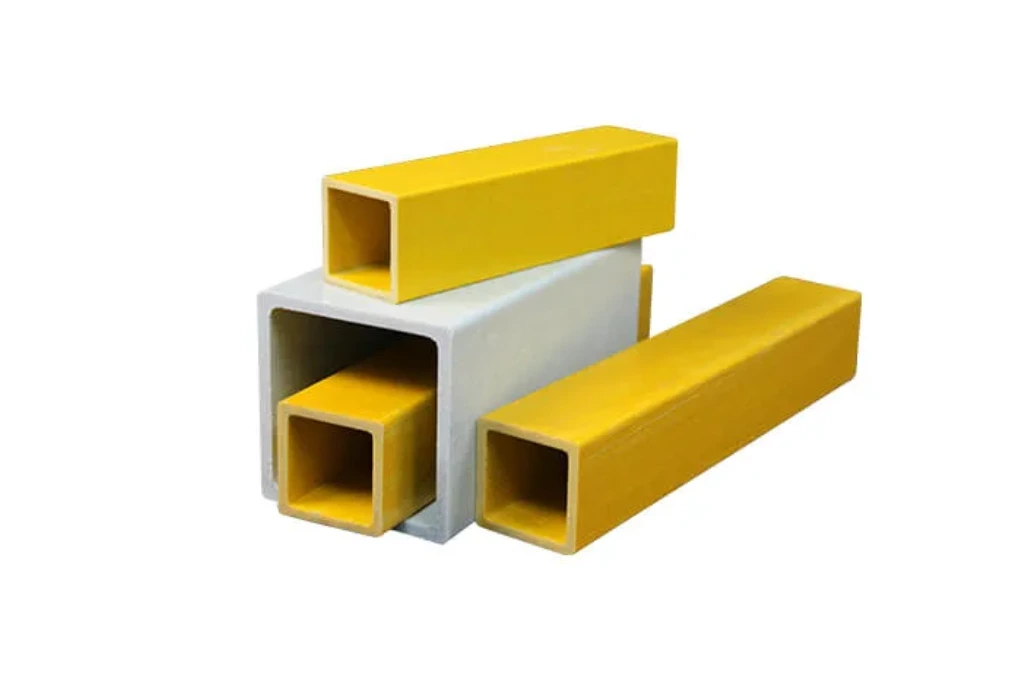
- Square Tubes
- Rectangular Tubes
- Round Tubes
Because the reinforcement runs continuously along the profile, pultruded FRP provides high strength while maintaining relatively low weight.
Today, these profiles are widely used in industrial infrastructure, utilities, transportation, and increasingly in renewable energy applications.
Corrosion Resistance for Long-Term Outdoor Performance
Renewable energy projects are often installed in environments where corrosion is unavoidable.
Steel structures exposed to moisture or coastal conditions require protective coatings and periodic maintenance. Once coatings deteriorate, corrosion can spread quickly and reduce structural reliability.
In comparison, corrosion resistant FRP profiles do not rust because corrosion resistance is an inherent property of the composite material rather than a surface treatment.
This makes FRP particularly suitable for:
- Coastal solar farms
- Offshore support facilities
- Desert solar installations with seasonal humidity
- Renewable energy infrastructure in chemical or industrial zones
Reduced corrosion also contributes to lower maintenance costs over the lifetime of the project.
Non-Conductive Properties Improve Electrical Safety
Electrical insulation is another significant advantage of FRP materials.
Unlike steel, non-conductive FRP structural profiles do not conduct electricity. This characteristic is valuable in renewable energy systems where structural components are installed close to electrical equipment and high-voltage cables.
Typical applications include:
- Solar inverter platforms
- Cable support structures
- Electrical equipment frames
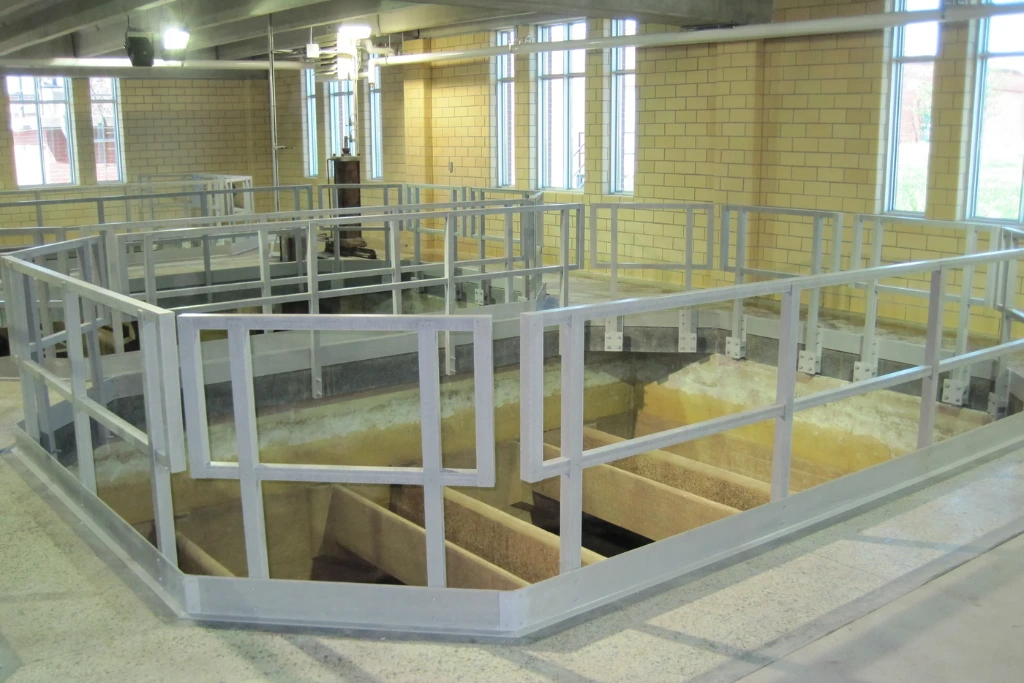
- Maintenance walkways near energized systems
Using non-conductive structural materials helps improve workplace safety while reducing electrical risks during installation and maintenance.
UV Resistance for Continuous Outdoor Exposure
Renewable energy facilities operate under direct sunlight throughout their service life.
Prolonged UV exposure can accelerate the aging of many materials. UV resistant FRP profiles are designed to maintain their structural stability and surface performance despite years of outdoor exposure.
This characteristic is particularly important for:
- Solar power plants
- Rooftop photovoltaic systems
- Wind energy facilities
- Open-field renewable energy projects
Long-term UV stability contributes to predictable structural performance and reduced replacement frequency.
Lightweight Structures Improve Installation Efficiency
Weight has a significant impact on transportation, installation, and structural design.
Compared with conventional steel members, lightweight FRP profiles simplify handling and reduce installation time. This provides several practical benefits:
- Lower transportation costs
- Easier installation in remote project locations
- Reduced crane requirements
- Lower structural loads on supporting systems
- Faster project completion
These advantages become especially valuable for utility-scale renewable energy developments covering large areas.
Applications in Solar Energy Systems
Solar projects require structural components that combine durability with installation efficiency.
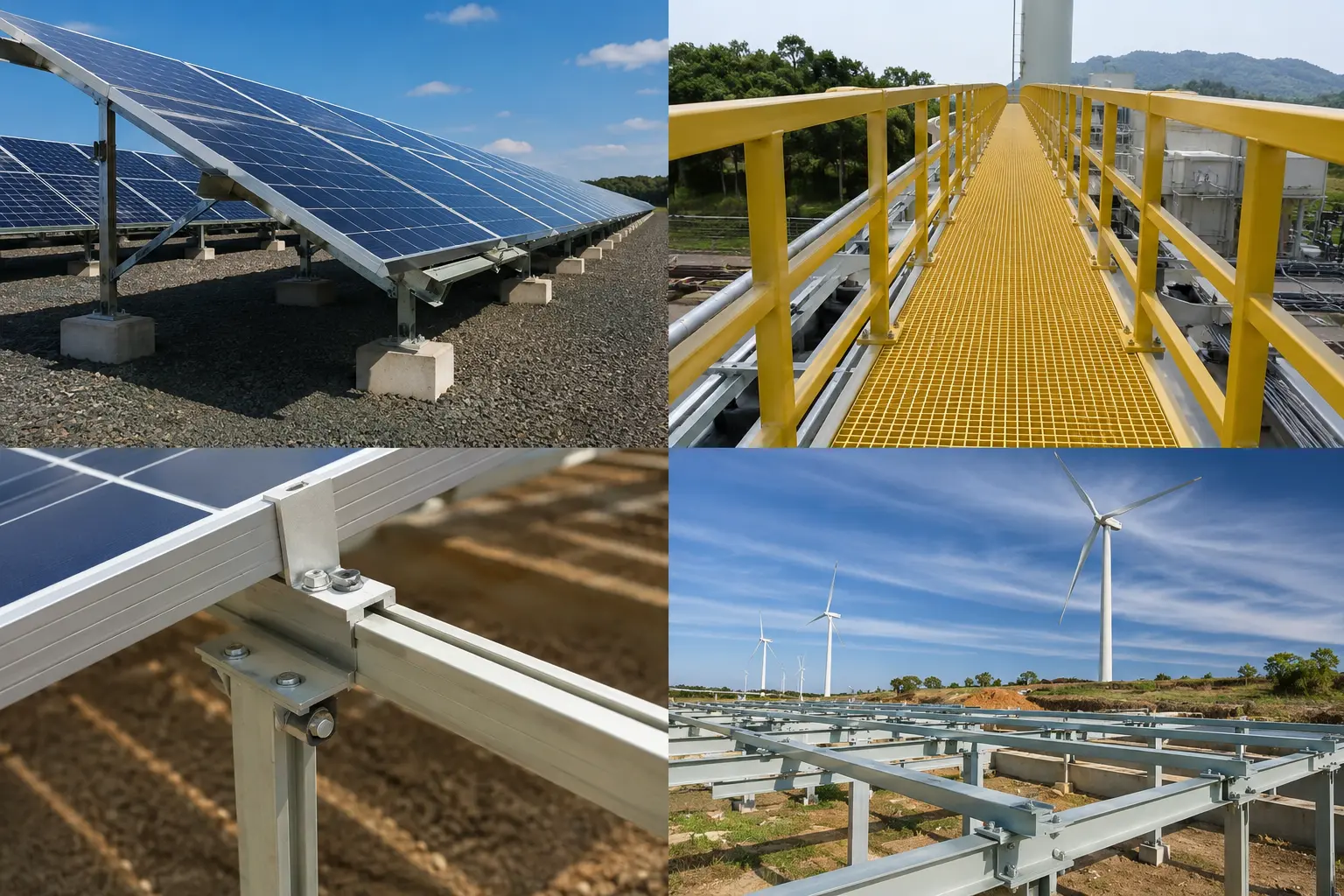
Today, FRP profiles for solar energy systems are used in a variety of supporting applications, including:
- Solar panel support structures
- Cable management systems
- Maintenance platforms
- Walkways
- Equipment support frames
One growing application is the use of FRP solar panel mounting brackets and FRP solar brackets, which provide corrosion-resistant support while reducing overall structural weight.
Because FRP materials require minimal maintenance, they help improve the long-term operational efficiency of photovoltaic installations.
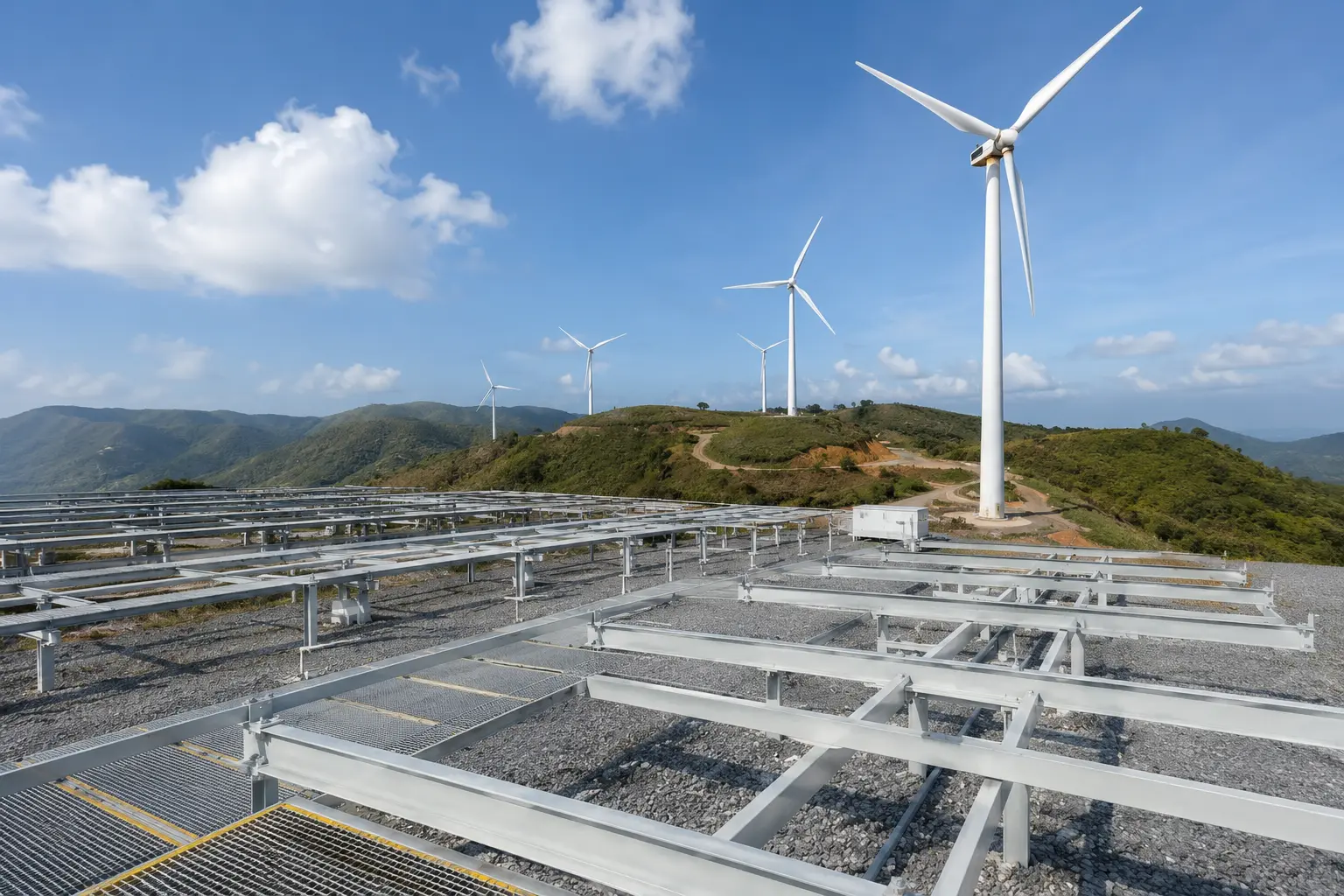
Applications in Wind Energy Structures
Wind energy projects also benefit from composite structural solutions.
Many wind farms operate in coastal or elevated environments where humidity, salt exposure, and changing weather conditions accelerate corrosion.
FRP profiles for wind energy structures can be used for:
- Cable support systems
- Access platforms
- Maintenance walkways
- Secondary structural components
- Equipment frames
Their combination of corrosion resistance, electrical insulation, and lightweight performance makes them suitable for supporting infrastructure surrounding wind energy facilities.
Selecting a Reliable FRP Profiles Manufacturer
Consistent manufacturing quality is essential for structural applications.
When choosing an FRP profiles manufacturer, project owners should evaluate:
- Manufacturing consistency
- Material quality
- Engineering support
- Production capacity
- Export capability
- Ability to develop customized structural profiles
A reliable manufacturing partner helps ensure stable product quality across large-scale renewable energy projects.
THE FRONT and STRONX Pultruded Structural Solutions
THE FRONT manufactures pultruded composite structural profiles under its STRONX product line for industrial and infrastructure applications.
STRONX, the pultruded FRP structural profile brand of THE FRONT, includes a wide range of structural sections suitable for demanding outdoor environments. Designed for durability, corrosion resistance, and lightweight performance, these profiles support engineering projects that require reliable long-term structural materials.
With export-oriented manufacturing capabilities, THE FRONT supplies composite structural solutions to customers across international markets, supporting applications in industrial construction, infrastructure, utilities, and renewable energy.
Renewable energy infrastructure requires structural materials capable of delivering reliable performance over decades of outdoor operation. From corrosion resistance and UV stability to electrical insulation and lightweight construction, FRP pultruded profiles for renewable energy provide clear engineering advantages over traditional materials in many applications.
Whether used in FRP profiles for solar energy systems, FRP solar panel mounting brackets, or FRP profiles for wind energy structures, pultruded composites help improve installation efficiency, reduce maintenance requirements, and extend service life.
Through its STRONX pultruded profile product line, THE FRONT continues to provide high-quality composite structural solutions that support the growing global demand for renewable energy infrastructure.