Modern agriculture increasingly relies on controlled environments to improve crop yield, quality, and resource efficiency. Among these systems, greenhouses play a central role by regulating temperature, humidity, and light conditions. However, greenhouse structures are constantly exposed to environmental stress, including high humidity, UV radiation, chemical exposure from fertilizers, and, in some regions, salt-laden air.
These conditions place significant demands on structural materials. Traditional materials such as steel and aluminum often struggle with corrosion, maintenance, and long-term performance. In response, FRP pultruded profiles for agricultural structures are becoming a preferred solution for greenhouse construction, particularly in harsh climates.
Environmental Challenges in Greenhouse Structures
Greenhouses operate in conditions that accelerate material degradation.
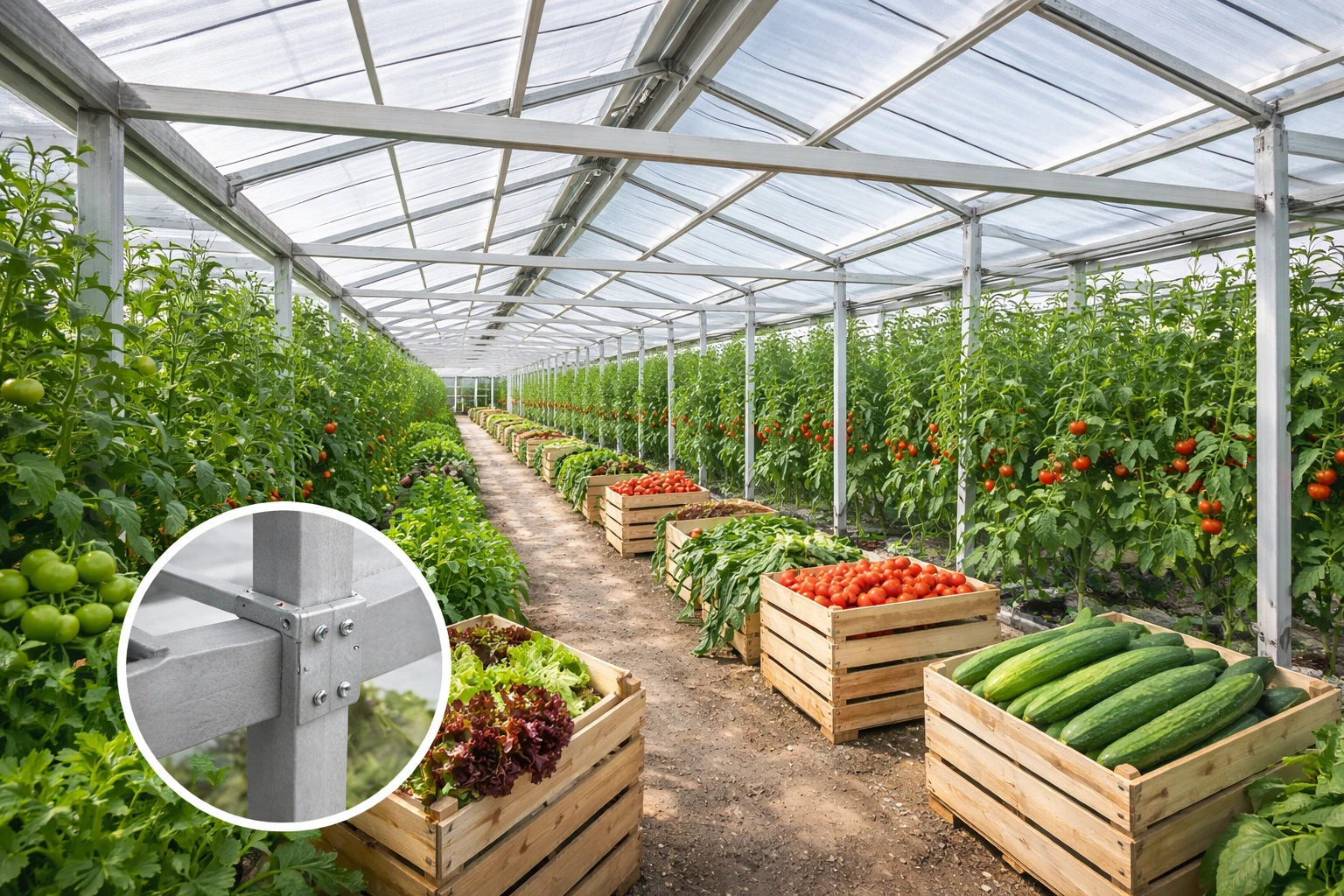
Inside a greenhouse, high humidity levels are necessary for plant growth. Combined with fertilizers, irrigation systems, and cleaning chemicals, this creates a corrosive micro-environment. Externally, structures may also be exposed to strong sunlight, temperature fluctuations, and, in coastal or tropical regions, salt air.
Key challenges include:
- Corrosion of metallic structural components
- UV degradation of materials over time
- Moisture accumulation affecting structural integrity
- Increased maintenance and operational costs
These factors require materials that can withstand both internal and external environmental stress without compromising performance.
What Are FRP Pultruded Profiles?
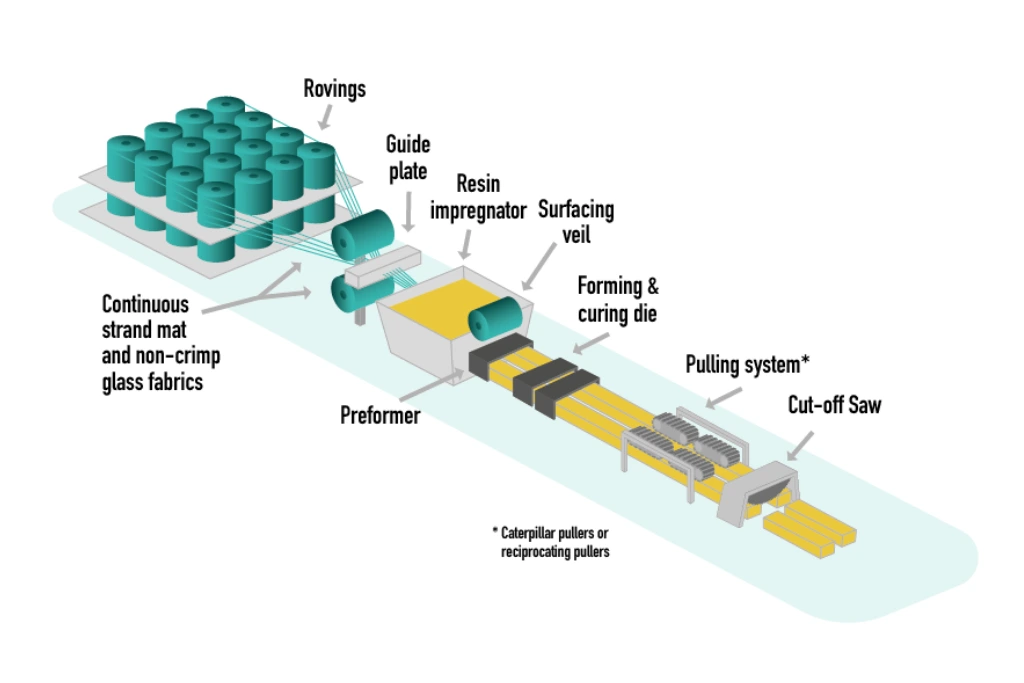
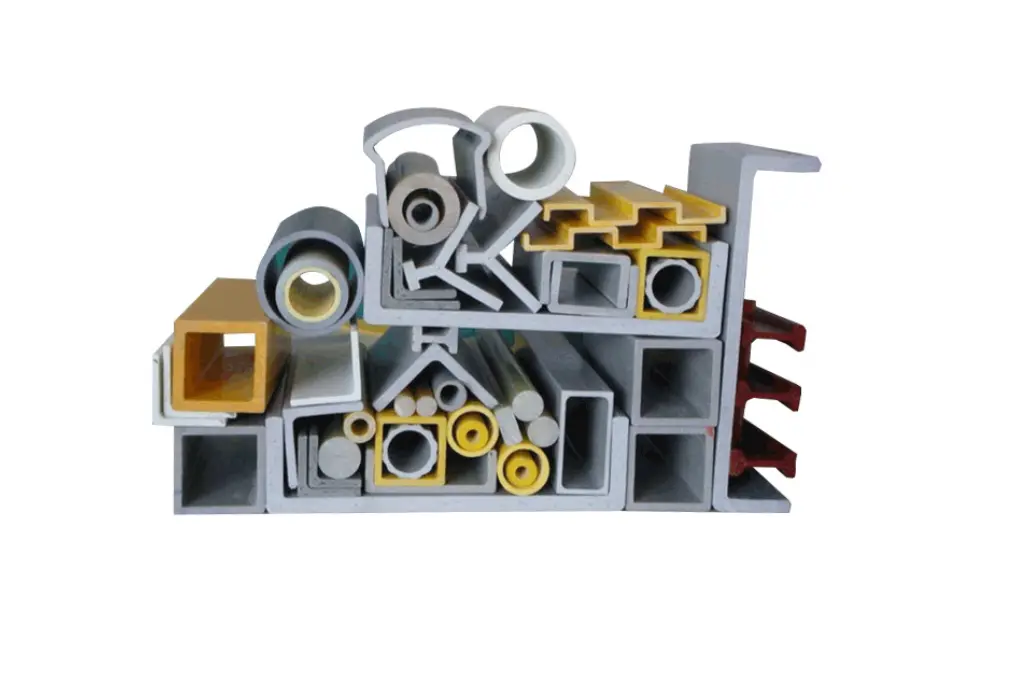
FRP pultrusion is a manufacturing process that produces high-performance composite profiles with consistent properties.
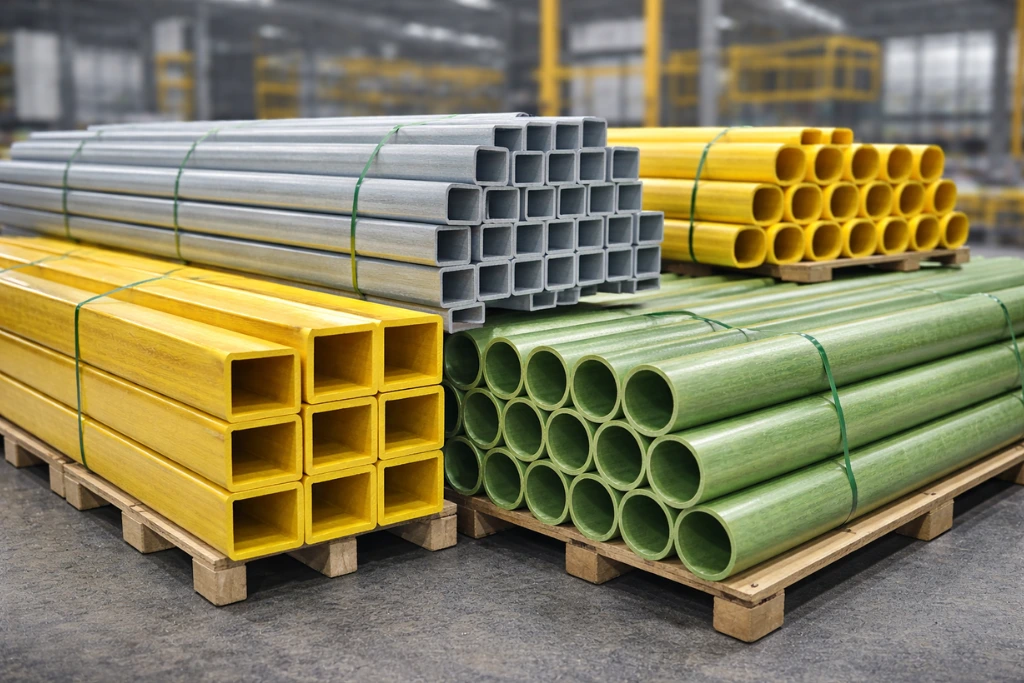
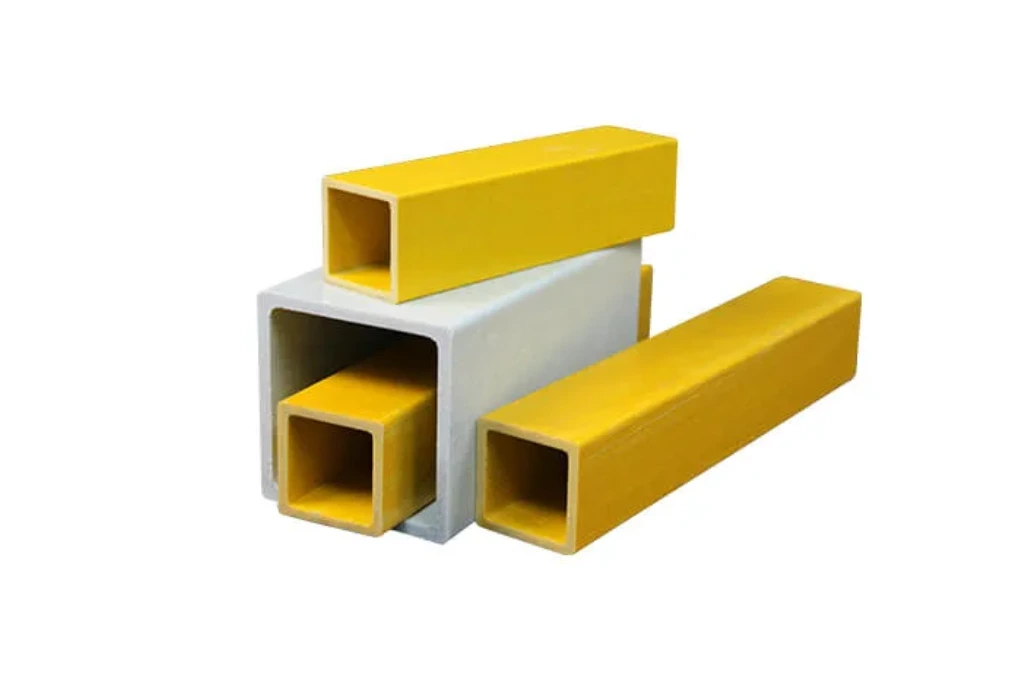
Through this process, fiberglass reinforcement is combined with resin and formed into structural shapes such as beams, tubes, and channels. The result is a range of pultruded FRP structural profiles that offer predictable mechanical performance and long-term durability.
Unlike traditional materials, FRP profiles are engineered to resist environmental degradation, making them suitable for FRP profiles for agriculture and greenhouse applications.
Corrosion Resistance in High-Humidity Environments
Corrosion resistance is essential for greenhouse structures.
Steel frames are vulnerable to rust in humid environments, especially when exposed to fertilizers and chemicals. Even protective coatings degrade over time, leading to ongoing maintenance requirements.
In contrast, corrosion-resistant FRP profiles maintain their integrity without the need for coatings or surface protection. Their resistance is inherent to the material, allowing them to perform reliably in wet and chemically active environments.
This makes FRP an effective solution for:
- Irrigated greenhouse systems
- Hydroponic farming facilities
- Fertilizer-intensive agricultural environments
UV Resistance for Long-Term Outdoor Exposure
Greenhouse structures are continuously exposed to sunlight, making UV resistance a critical factor.
Traditional materials may degrade, discolor, or lose mechanical strength under prolonged UV exposure. UV-resistant FRP profiles are designed to maintain both structural performance and surface stability over time.
In tropical and high-radiation regions, this ensures that greenhouse structures remain durable without requiring frequent replacement or repair.
Lightweight Design for Efficient Installation
Lightweight FRP profiles improve construction efficiency and structural design flexibility.
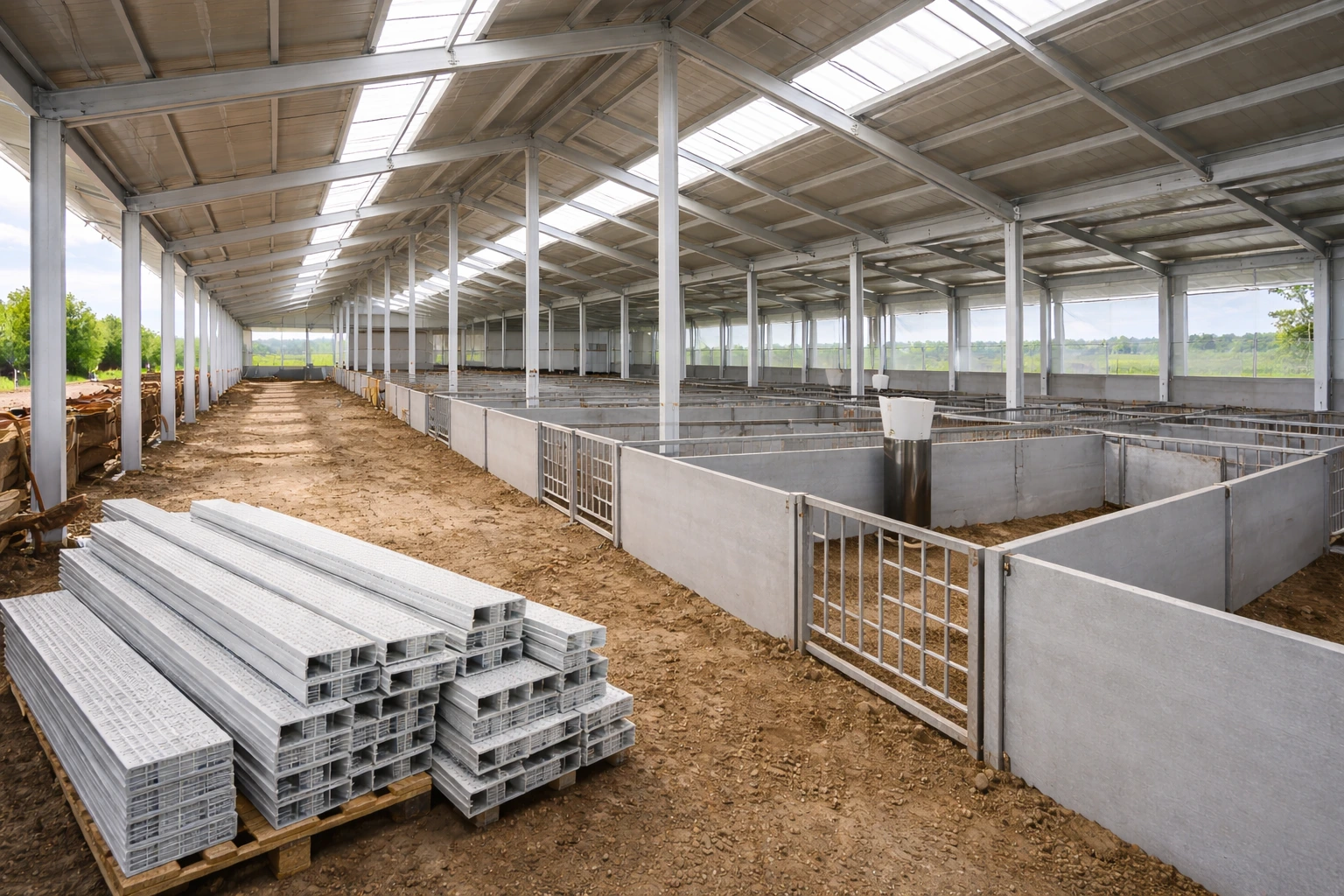
Compared to steel, lightweight FRP profiles are easier to transport, handle, and install. This is particularly important for agricultural projects in remote or rural areas where logistics can be challenging.
Benefits include:
- Faster installation timelines
- Reduced structural load on foundations
- Easier expansion or modification of greenhouse systems
- Lower transportation costs
These advantages support scalable agricultural development.
Performance in Tropical and Coastal Agricultural Regions
Greenhouses in tropical and coastal regions face combined environmental stress factors.
High humidity, salt exposure, and strong UV radiation accelerate material degradation in conventional structures. FRP profiles for tropical coastal regions are specifically suited to these conditions, maintaining stability under both moisture and UV exposure.
Additionally, FRP profiles for saltwater environments are resistant to salt-induced corrosion, making them suitable for coastal agriculture, aquaculture facilities, and greenhouse systems near the sea.
Structural Stability and Load-Bearing Performance
Pultruded FRP profiles provide reliable structural support for greenhouse systems.
FRP beams and structural members are designed to support roofing materials, shading systems, and equipment loads. Continuous fiber reinforcement ensures consistent load distribution and predictable mechanical behavior.
In greenhouse applications, this allows for:
- Stable framing systems
- Efficient load transfer
- Reduced risk of structural deformation over time
These characteristics are essential for maintaining controlled environmental conditions.
Low Maintenance and Operational Efficiency
Reducing maintenance is a key objective in modern agricultural operations.
Steel greenhouse structures often require repainting, corrosion treatment, and periodic replacement of damaged components. In contrast, low maintenance FRP profiles significantly reduce these requirements.
This leads to:
- Lower lifecycle costs
- Reduced downtime for repairs
- Improved operational continuity
For large-scale agricultural facilities, these benefits translate directly into cost savings and productivity improvements.
Additional Applications: Safety and Fencing Systems
FRP materials are also used in auxiliary greenhouse infrastructure.
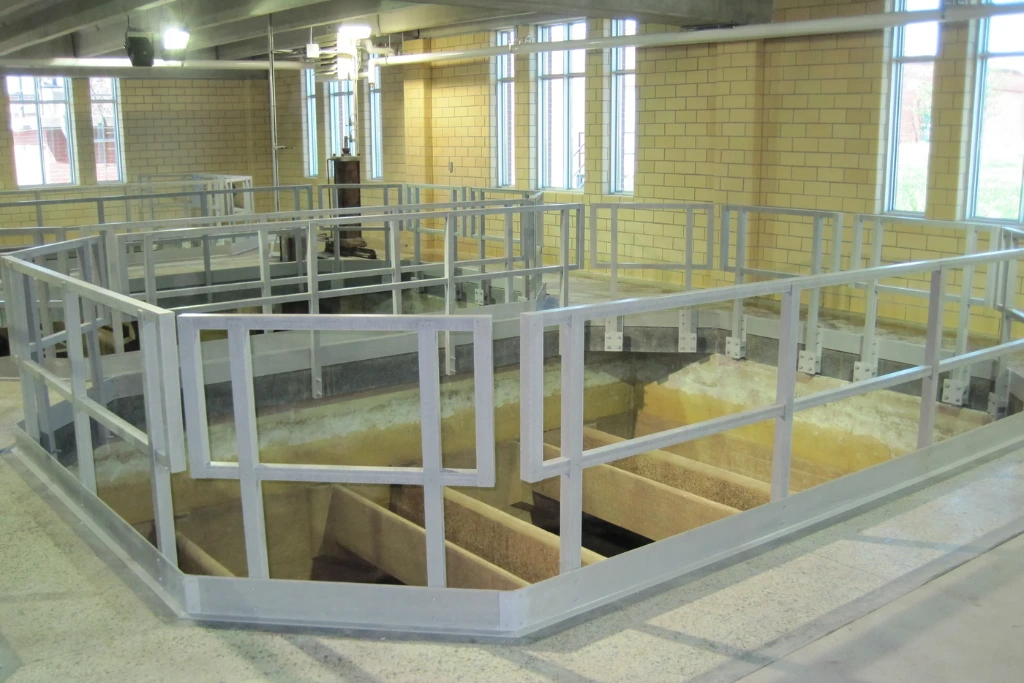
In agricultural facilities, non-conductive FRP fencing can be used for safety barriers, equipment protection, and controlled access areas. These systems provide electrical insulation and corrosion resistance, supporting safe operation in environments with irrigation and electrical systems.
THE FRONT and STRONX FRP Solutions for Agriculture
THE FRONT develops pultruded composite solutions for agricultural structures through its STRONX product line.
STRONX, the pultruded FRP product line of THE FRONT, includes structural profiles suitable for greenhouse frames and agricultural infrastructure. These profiles are designed to deliver durability, lightweight performance, and resistance to corrosion and UV exposure.
By focusing on manufacturing consistency and export-oriented supply, THE FRONT supports global demand for FRP pultruded profiles for agricultural structures, particularly in regions with harsh environmental conditions.
FRP pultruded profiles for agricultural structures provide a durable and efficient solution for greenhouse systems operating in harsh climates.
By combining corrosion resistance, UV stability, lightweight design, and low maintenance, FRP profiles address the key challenges faced by modern agricultural infrastructure.
Through its STRONX product line, THE FRONT supports the development of resilient greenhouse structures capable of maintaining performance under demanding environmental conditions. As agriculture continues to evolve toward controlled and sustainable systems, FRP materials play an increasingly important role in optimizing structural performance and long-term efficiency.