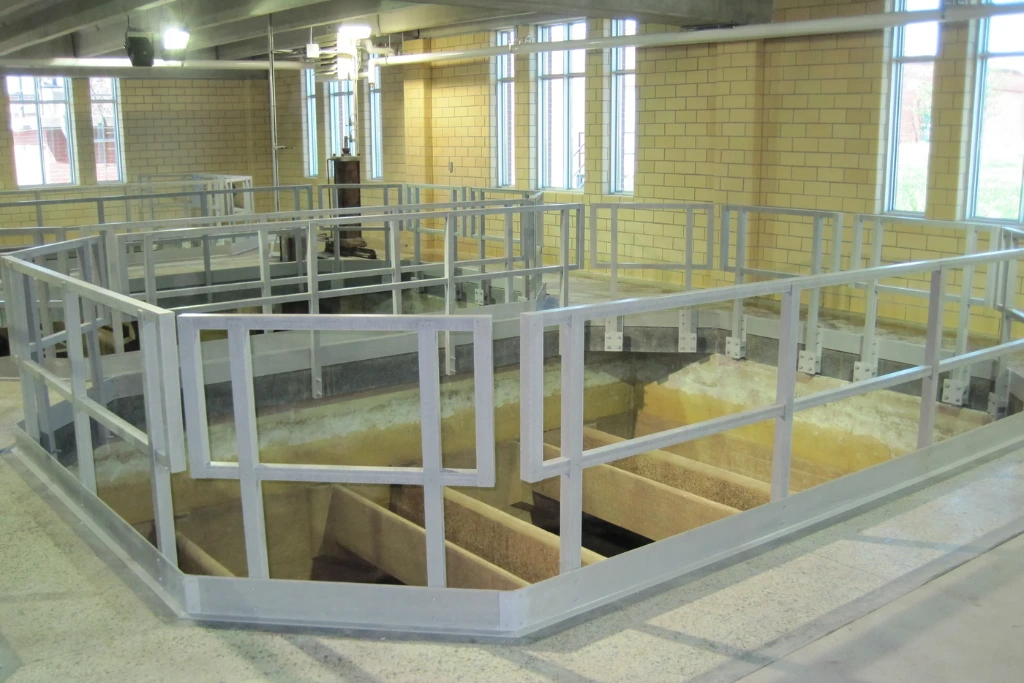
In industrial roofing and structural systems, purlins play a critical role in supporting roof loads and maintaining overall structural stability. Traditionally, steel purlins have dominated industrial construction due to their availability and familiarity. However, as projects increasingly face corrosive environments, high maintenance costs, and long-term durability concerns, FRP purlins have emerged as a practical alternative.
This article provides a performance-based comparison of FRP purlin vs steel purlin, with additional reference to aluminum and timber purlins, focusing on engineering performance, durability, and lifecycle value rather than short-term material cost.
Overview of FRP and Steel Purlins
Steel purlins are metallic structural members commonly used in industrial roofs. They offer high initial strength but are vulnerable to corrosion and require protective coatings.
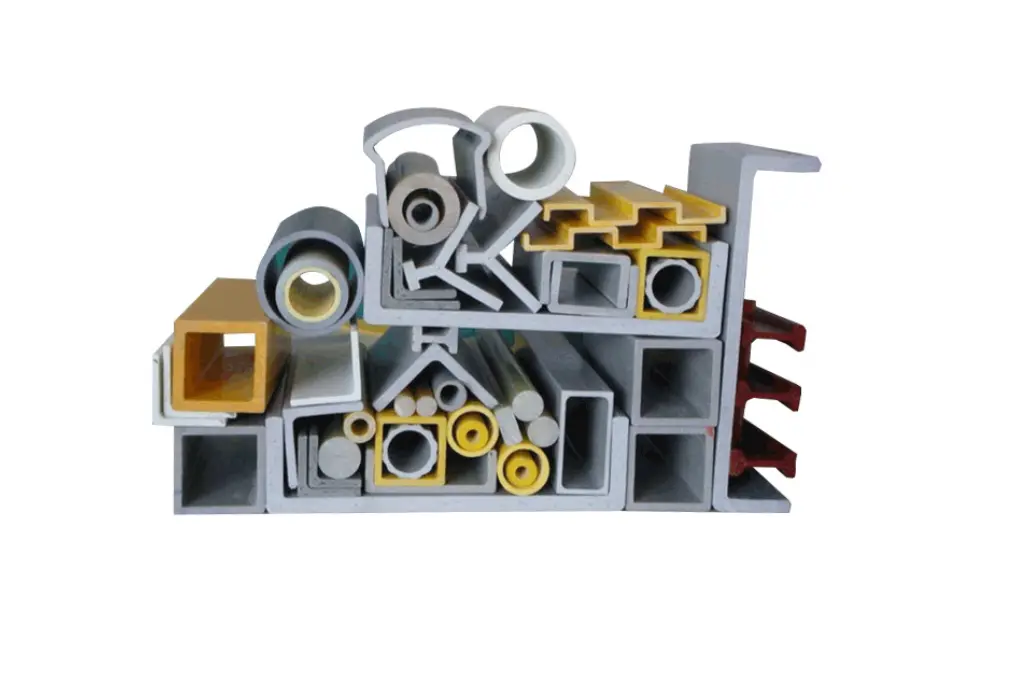
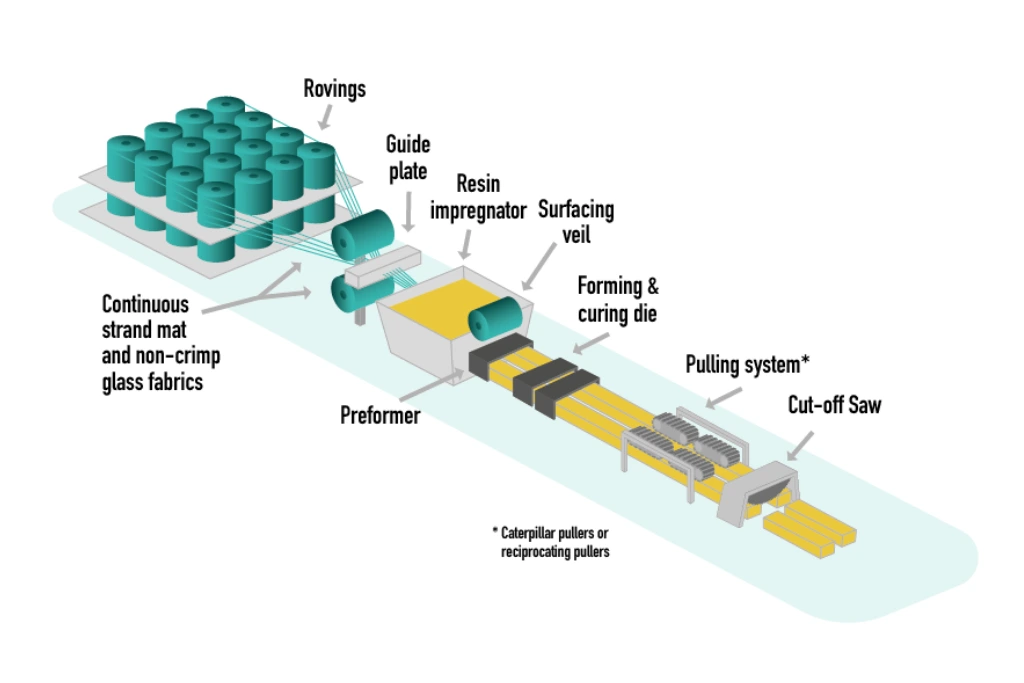
FRP purlins, typically manufactured as pultruded FRP profiles, are composite structural members reinforced with continuous fiberglass and resin. They are designed to deliver structural stability while resisting corrosion and environmental degradation.
Both materials can support roof loads, but their long-term performance differs significantly depending on operating conditions.
Weight Comparison: Lightweight FRP Profiles vs Steel
Weight is one of the most significant differences between FRP and steel purlins.
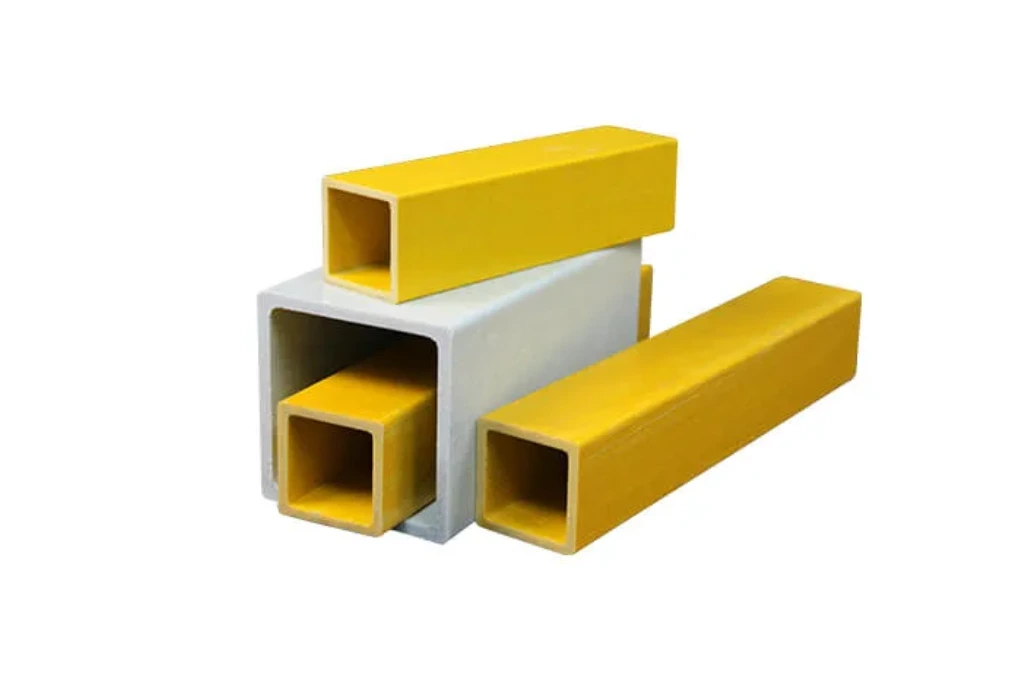
FRP purlins are considerably lighter than steel. This reduced weight simplifies transportation, handling, and installation, especially for large-span industrial roofs. Lighter structures also reduce load on primary frames and foundations.
Steel purlins, while strong, add substantial dead load to the structure. This can increase overall construction costs, particularly in large industrial facilities.
Compared to aluminum, FRP offers similar lightweight advantages while delivering better stiffness in many structural configurations. Timber, although lightweight, lacks the dimensional stability and durability required for industrial environments.
Corrosion Resistance and Environmental Durability
Corrosion resistance is a decisive factor in purlin selection.
Steel purlins are highly susceptible to corrosion in humid, coastal, chemical, or industrial environments. Even with galvanization or coatings, long-term exposure leads to rust, degradation, and frequent maintenance.
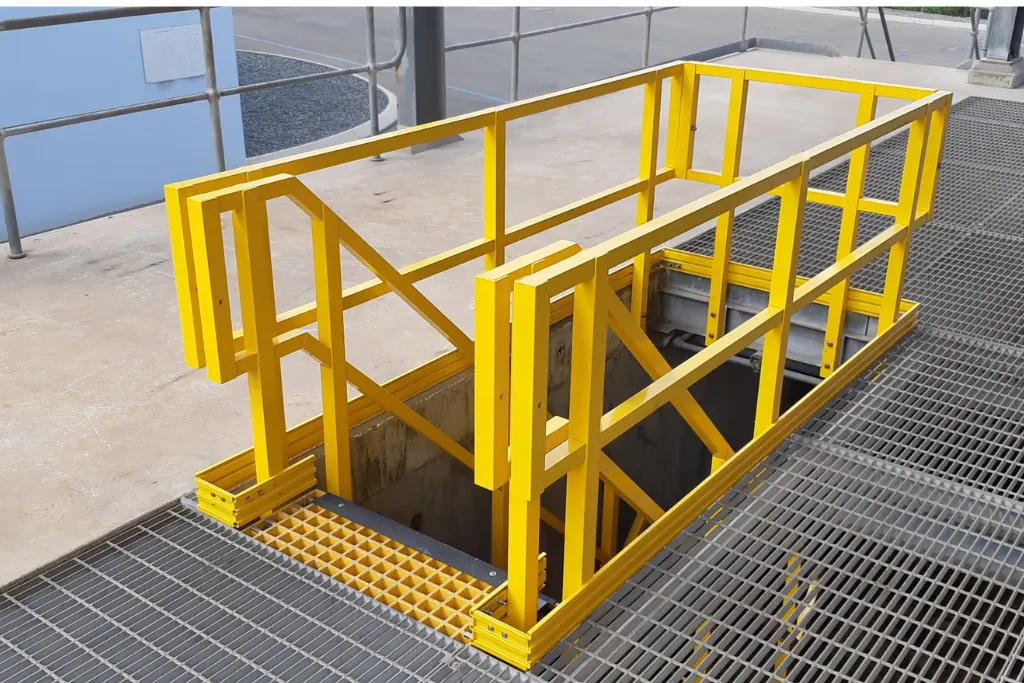
FRP purlins are inherently corrosion resistant. They do not rust, oxidize, or degrade when exposed to moisture, chemicals, or industrial fumes. This makes corrosion-resistant FRP profiles suitable for chemical plants, wastewater facilities, food processing factories, and coastal installations.
Aluminum offers better corrosion resistance than steel but can suffer from galvanic corrosion and strength loss in aggressive environments. Timber is vulnerable to moisture, biological attack, and decay.
Electrical and Thermal Properties
Electrical insulation is a key advantage of FRP purlins.
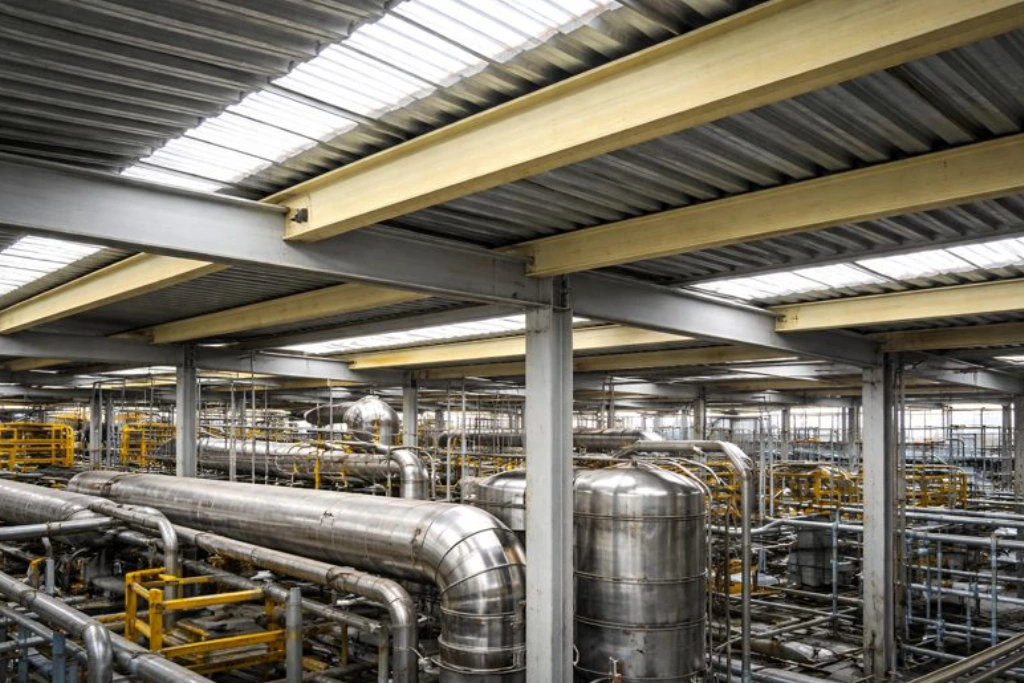
FRP is non-conductive, making it safer for facilities with electrical equipment, overhead power lines, or high-voltage installations. This property is particularly valuable in industrial roofing systems where accidental contact may occur.
Steel and aluminum are conductive materials, requiring additional grounding and insulation measures. Timber provides some insulation but lacks consistent performance under industrial conditions.
In terms of thermal behavior, FRP exhibits lower thermal conductivity than metals, reducing thermal bridging through the roof structure and contributing to improved energy performance.
Fire Performance Considerations
Fire behavior is an important design consideration for roof structures.
Steel does not burn, but it rapidly loses strength at elevated temperatures, leading to structural failure during fire exposure. Aluminum melts at relatively low temperatures and also loses load-bearing capacity quickly.
FRP purlins can be manufactured with fire-retardant resin systems. While FRP is an organic material, appropriate formulations help slow flame spread and reduce smoke generation, depending on application requirements.
Timber is combustible and typically requires additional fire protection treatments in industrial buildings.
Structural Strength and Load-Bearing Capability
Both FRP and steel purlins can meet structural load requirements when properly designed.
Steel offers high stiffness and strength but relies heavily on corrosion protection to maintain performance over time.
FRP purlins produced through high-strength FRP pultrusion align continuous fibers along the load direction, resulting in efficient load transfer and predictable mechanical behavior. While FRP may have lower modulus than steel, proper section design compensates for this difference.
Aluminum provides moderate strength but often requires larger sections to achieve equivalent stiffness. Timber lacks the consistency and predictability required for modern industrial roofing systems.
Maintenance Requirements and Lifecycle Cost
Lifecycle cost is where FRP purlins offer a clear advantage.
Steel purlins require regular inspection, recoating, and corrosion repair, especially in aggressive environments. These ongoing maintenance activities increase operational costs and downtime.
FRP purlins are considered low maintenance FRP profiles. They do not require painting, galvanizing, or corrosion treatment, significantly reducing long-term expenses.
While the initial material cost of FRP may be higher than steel, the total cost over the service life is often lower due to reduced maintenance and longer durability.
Comparison Summary: FRP vs Steel vs Aluminum vs Timber
From an engineering perspective:
- FRP purlins excel in corrosion resistance, lightweight performance, electrical insulation, and lifecycle value.
- Steel purlins provide high initial strength but suffer from corrosion and maintenance demands.
- Aluminum purlins offer lightweight properties but may compromise stiffness and durability in industrial environments.
- Timber purlins are generally unsuitable for modern industrial roofing due to durability and fire concerns.
This comparison highlights why FRP is increasingly specified in industrial projects focused on long-term performance.
THE FRONT and STRONX FRP Purlin Solutions
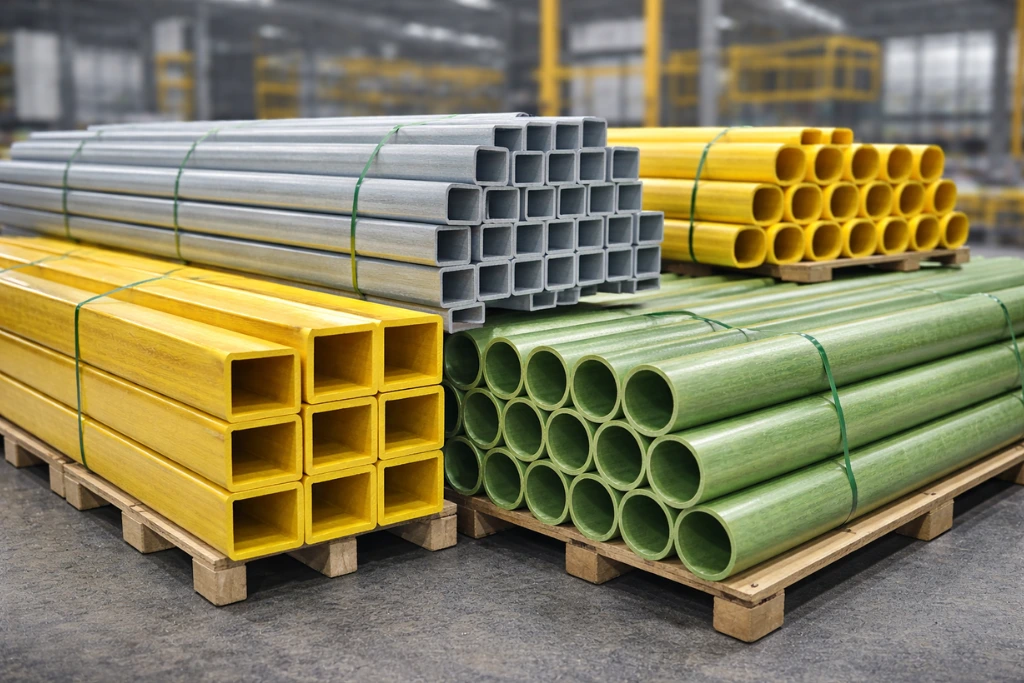
THE FRONT manufactures FRP purlins through its STRONX pultruded product line.
STRONX FRP purlins are designed for industrial roofing systems that demand corrosion resistance, structural reliability, and low maintenance. By utilizing controlled pultrusion processes, THE FRONT ensures consistent geometry and stable mechanical performance.
As part of a broader range of FRP pultruded profiles, STRONX purlins support industrial facilities seeking durable alternatives to traditional materials.
The comparison of FRP purlin vs steel purlin clearly shows that material selection should be based on long-term performance rather than initial cost alone. In corrosive, industrial, or electrically sensitive environments, FRP purlins provide significant advantages in durability, safety, and lifecycle efficiency.
With its STRONX product line, THE FRONT supports modern industrial roofing projects by supplying pultruded FRP purlins engineered for strength, corrosion resistance, and long-term reliability. As industrial construction continues to evolve, FRP purlins are becoming a strategic choice for sustainable structural design.