Industrial engineering increasingly requires materials that combine strength, light weight, and long-term durability in harsh environments. Traditional steel and aluminum components often face problems such as corrosion, heavy installation requirements, and high maintenance costs. In contrast, pultruded FRP structural profiles provide a reliable and efficient alternative, offering stable mechanical performance and significantly improved environmental resistance.
Pultrusion technology enables the production of continuous, fiber-reinforced profiles that deliver predictable strength and long-lasting performance. These characteristics make pultruded FRP profiles suitable for industrial plants, infrastructure projects, and structural systems requiring lightweight and corrosion-resistant components. Through its STRONX product line, THE FRONT supplies pultruded profiles designed for demanding industrial conditions.
Understanding Pultruded FRP Structural Profiles
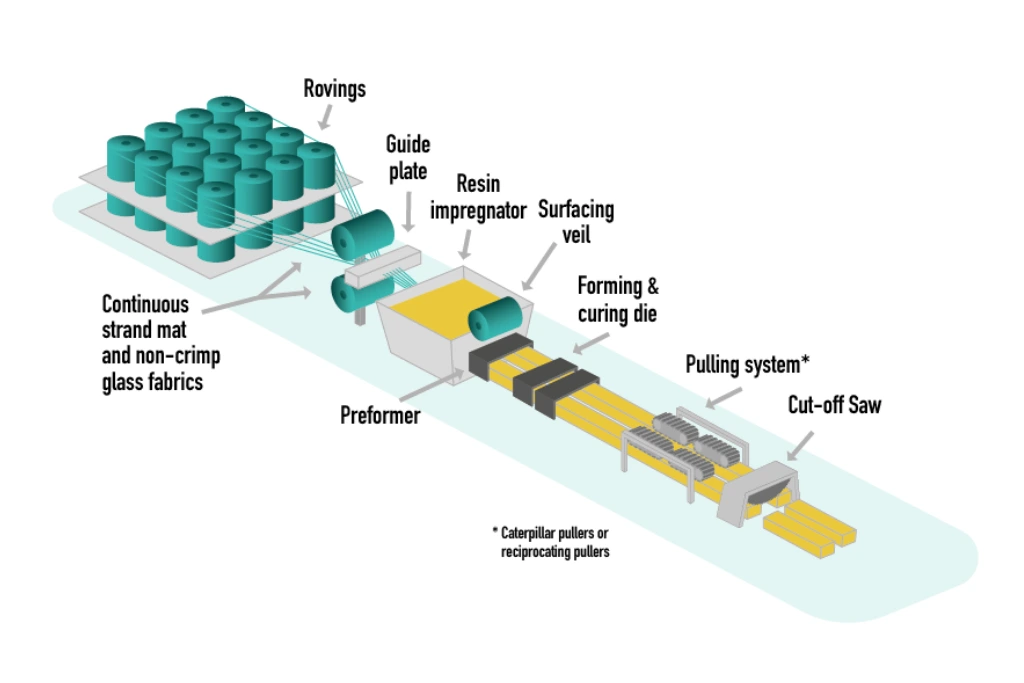
Pultruded FRP structural profiles are manufactured using a continuous process in which fiber reinforcement is pulled through a resin system and consolidated into a finished shape.
Glass fibers provide tensile strength and stiffness, while the polymer matrix ensures chemical resistance and stability. This combination results in profiles that maintain performance in environments where metal components degrade quickly due to moisture, chemicals, or salt exposure.
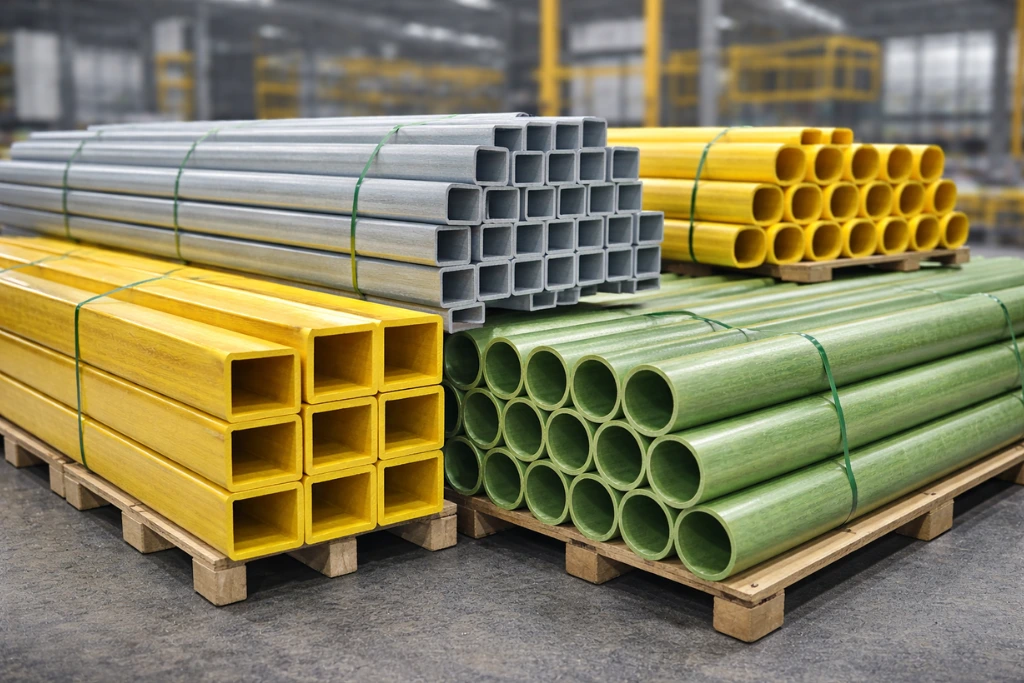
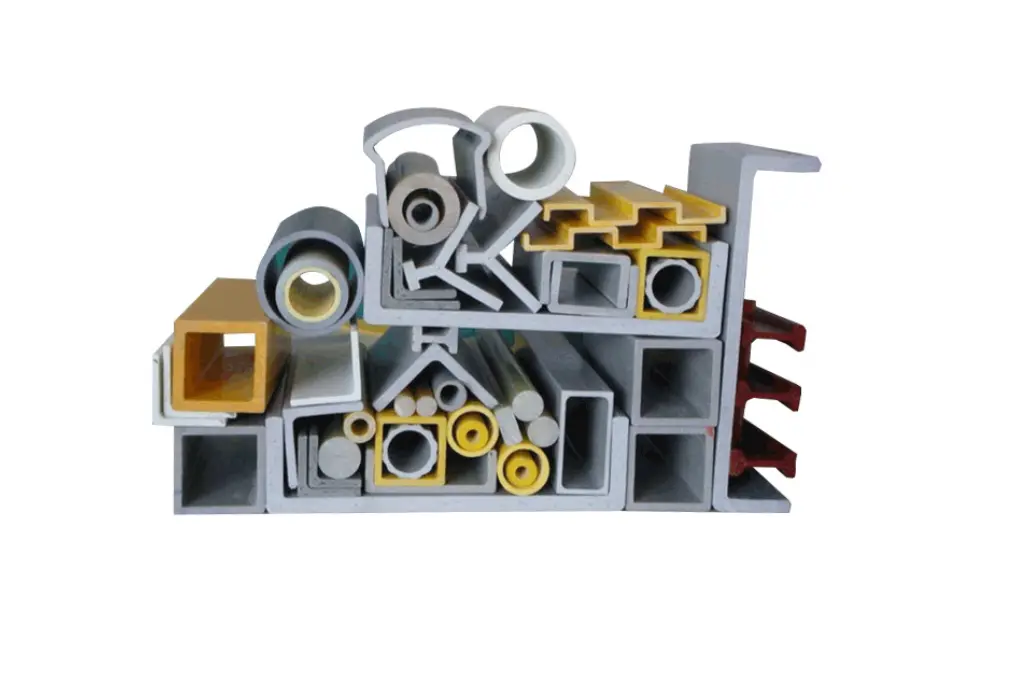
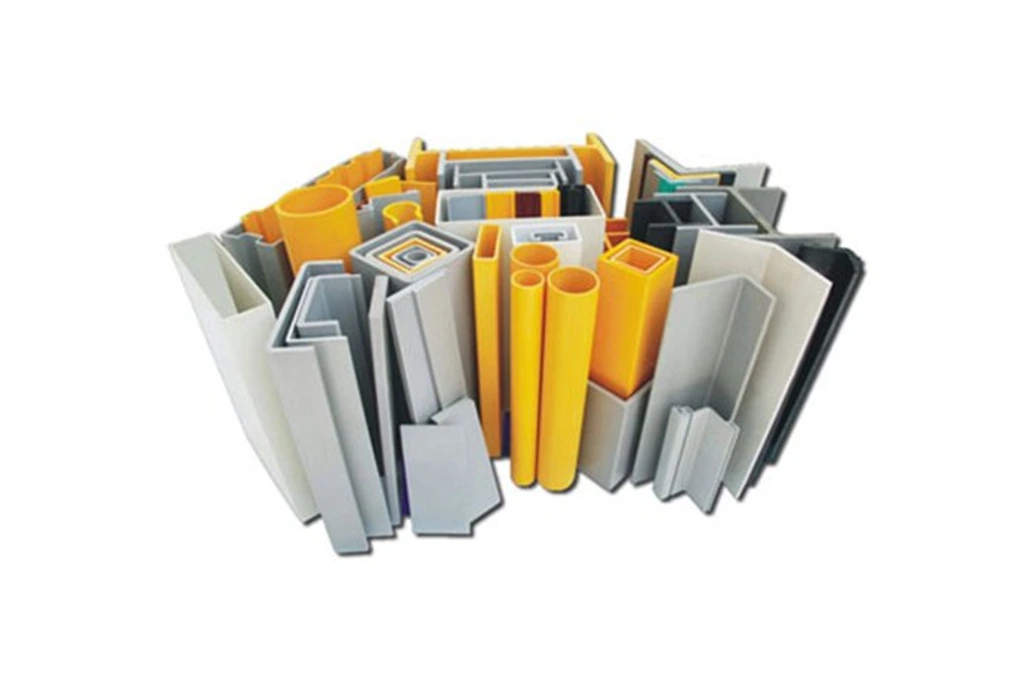
Pultrusion technology enables the production of a wide range of FRP structural shapes, including I beams, C channels, angles, square tubes, rectangular tubes, round tubes, and supporting members such as FRP purlins. These shapes form the backbone of many lightweight structural systems.
Engineering Benefits of Pultruded FRP Profiles
• Lightweight with high structural strength
Pultruded FRP profiles deliver strong load-bearing capacity without the weight of steel or aluminum. This reduces installation effort, simplifies material handling, and lowers structural demands on foundations.
• Corrosion resistance for long-term durability
Unlike metal profiles that corrode when exposed to harsh environments, FRP maintains its structural performance when in contact with moisture, salt air, industrial chemicals, and acidic conditions. This makes pultruded profiles suitable for chemical plants, marine infrastructure, and wastewater facilities.
• Consistent mechanical behavior from continuous reinforcement
Because fibers run continuously along the length of the profile, pultruded shapes offer stable strength and stiffness. This consistency supports reliable performance in industrial structures such as platforms, frames, and support systems.
• Low maintenance throughout the product life cycle
FRP profiles do not require recoating, rust removal, or routine surface treatment. Their durability contributes to lower long-term maintenance costs and improved operational efficiency for industrial facilities.
Pultrusion Technology and Its Manufacturing Advantages
The pultrusion process ensures precise control over fiber alignment, resin content, and profile geometry.
During production, reinforcing fibers are saturated with resin and pulled through a heated die, forming a rigid and dimensionally stable profile.
This manufacturing method offers key advantages:
- Uniform cross-sectional shape over long lengths
- Reliable mechanical properties
- Efficient use of materials with minimal waste
- Ability to produce complex FRP structural shapes for diverse applications
Because pultrusion is a continuous process, it is well-suited for large-scale industrial production where consistent quality is essential.
FRP Structural Shapes for Industrial and Engineering Applications
Pultruded FRP structural profiles support a wide variety of industrial engineering needs.
Common structural shapes include:
- FRP I beams for load-bearing frames
- C channels for secondary structural elements
- Angle profiles for connections and reinforcement points
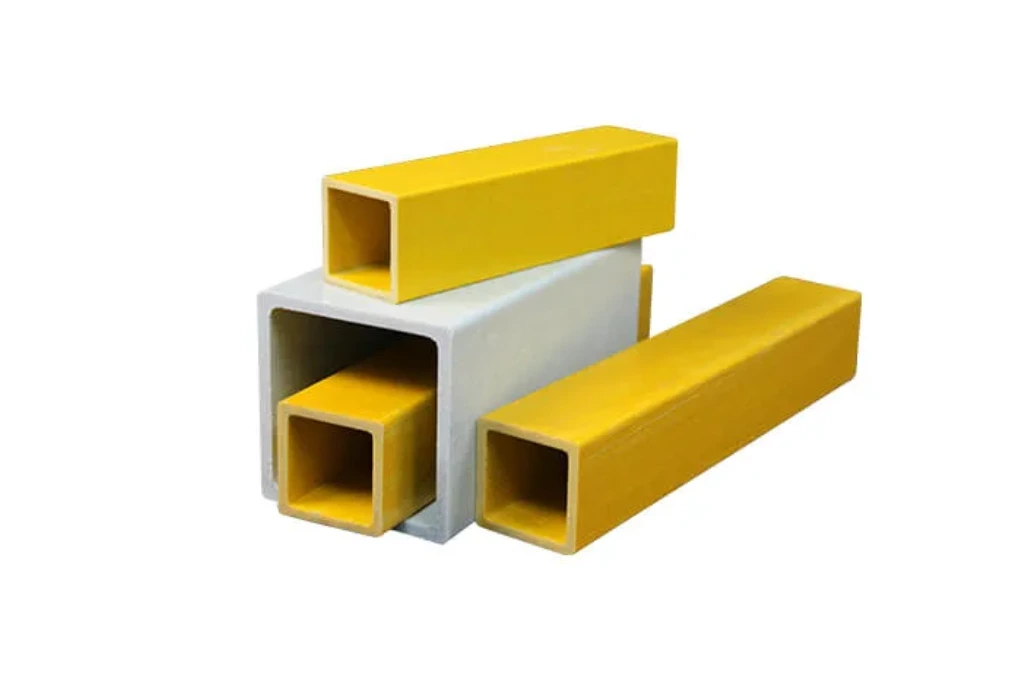
- Square and rectangular tubes for columns and modular structures
- Round tubes for support rails and lightweight frameworks
- FRP purlins for corrosion-resistant roofing systems
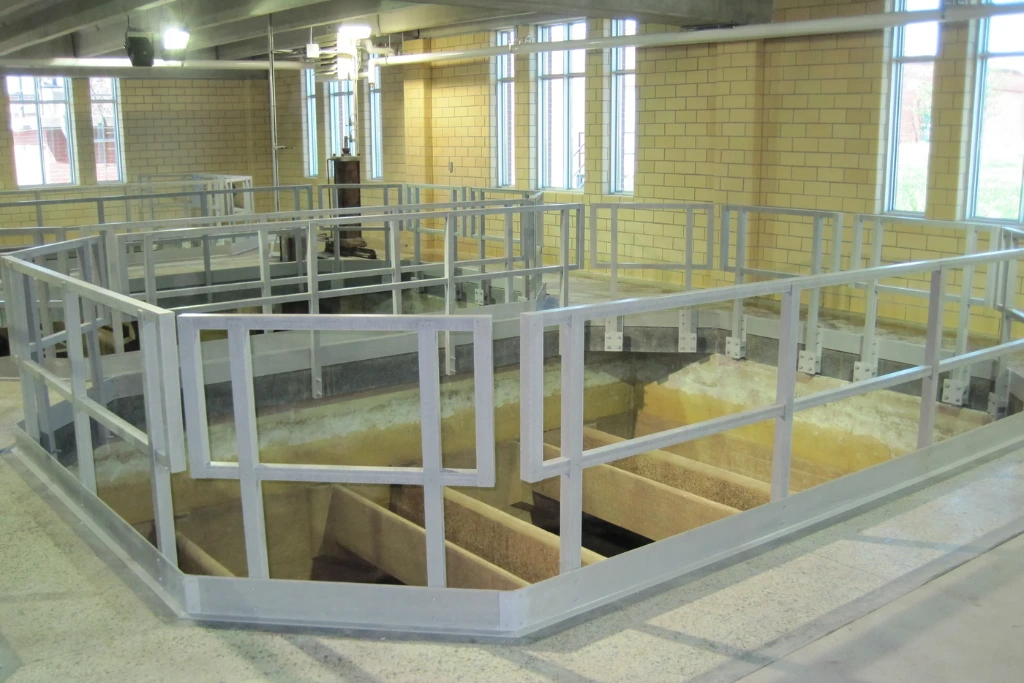
These profiles are used in industrial platforms, structural frames, access walkways, equipment supports, and architectural assemblies. Their lightweight nature makes them ideal for elevated structures and retrofitting applications where minimizing load is crucial.
Performance Advantages in Harsh Industrial Environments
Pultruded FRP profiles offer long-term performance in environments where steel or aluminum experience rapid degradation.
Key advantages include:
- Resistance to moisture and wet conditions
- Stability in chemically aggressive environments
- Reduced thermal expansion compared to metals
- Non-conductive properties for electrical safety
- Surface durability that withstands repeated loading and vibrations
This combination of performance traits enables pultruded FRP profiles to deliver reliable structural integrity in demanding industrial facilities.
Applications in Lightweight Industrial Engineering
Lightweight structures benefit significantly from pultruded FRP profiles due to their high strength-to-weight ratio and ease of installation.
Industrial engineers use pultruded profiles to build:
- Walkways and platforms that resist corrosion
- Structural frames for equipment and utility systems
- Non-metallic support structures in chemical plants
- Roof support systems using FRP purlins
- Lightweight modular frames for industrial processing units
Because FRP components can be installed quickly and easily transported, they are especially useful in remote sites, elevated structures, or environments with limited lifting equipment.
THE FRONT & STRONX as Manufacturers of Pultruded FRP Structural Profiles
THE FRONT, through its structural composite brand STRONX, supplies pultruded FRP structural profiles for international industrial projects. The company focuses on delivering reliable composite shapes with consistent mechanical properties and high durability.
Its pultrusion manufacturing process emphasizes:
- Controlled fiber reinforcement for mechanical stability
- High-quality resin systems for corrosion resistance
- Accurate profile dimensions for structural compatibility
- Strong supply capability for global industrial clients
As a pultruded FRP structural profiles manufacturer, THE FRONT supports engineers and contractors seeking long-lasting materials for demanding industrial environments.
Pultruded FRP structural profiles provide high-strength, lightweight, and corrosion-resistant alternatives to traditional structural materials. Their continuous reinforcement, stable mechanical performance, and minimal maintenance requirements make them ideal for modern industrial engineering. By delivering robust structural shapes such as I beams, C channels, angles, tubes, and purlins, pultruded FRP profiles offer engineers the flexibility and reliability needed for long-term operations in harsh environments. Through its STRONX product line, THE FRONT continues to supply durable pultruded solutions that support global industrial infrastructure with efficiency and stability.